

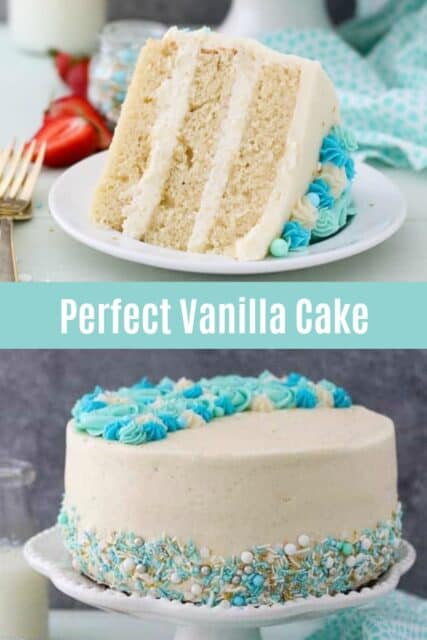
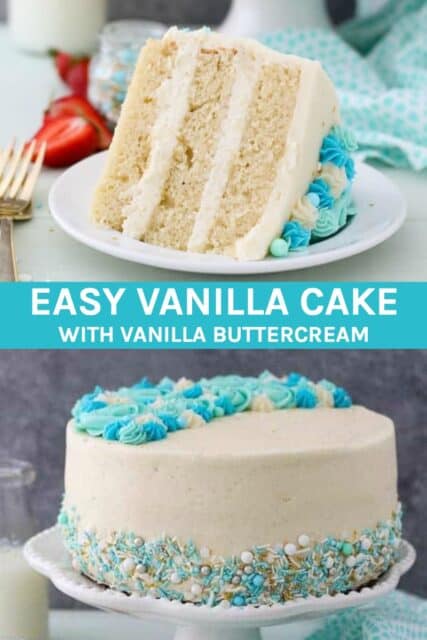
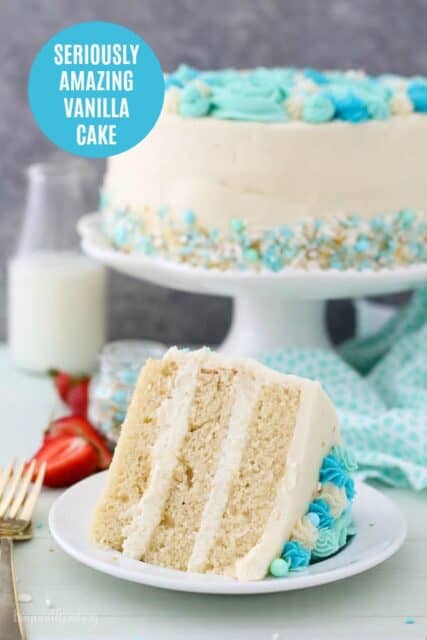
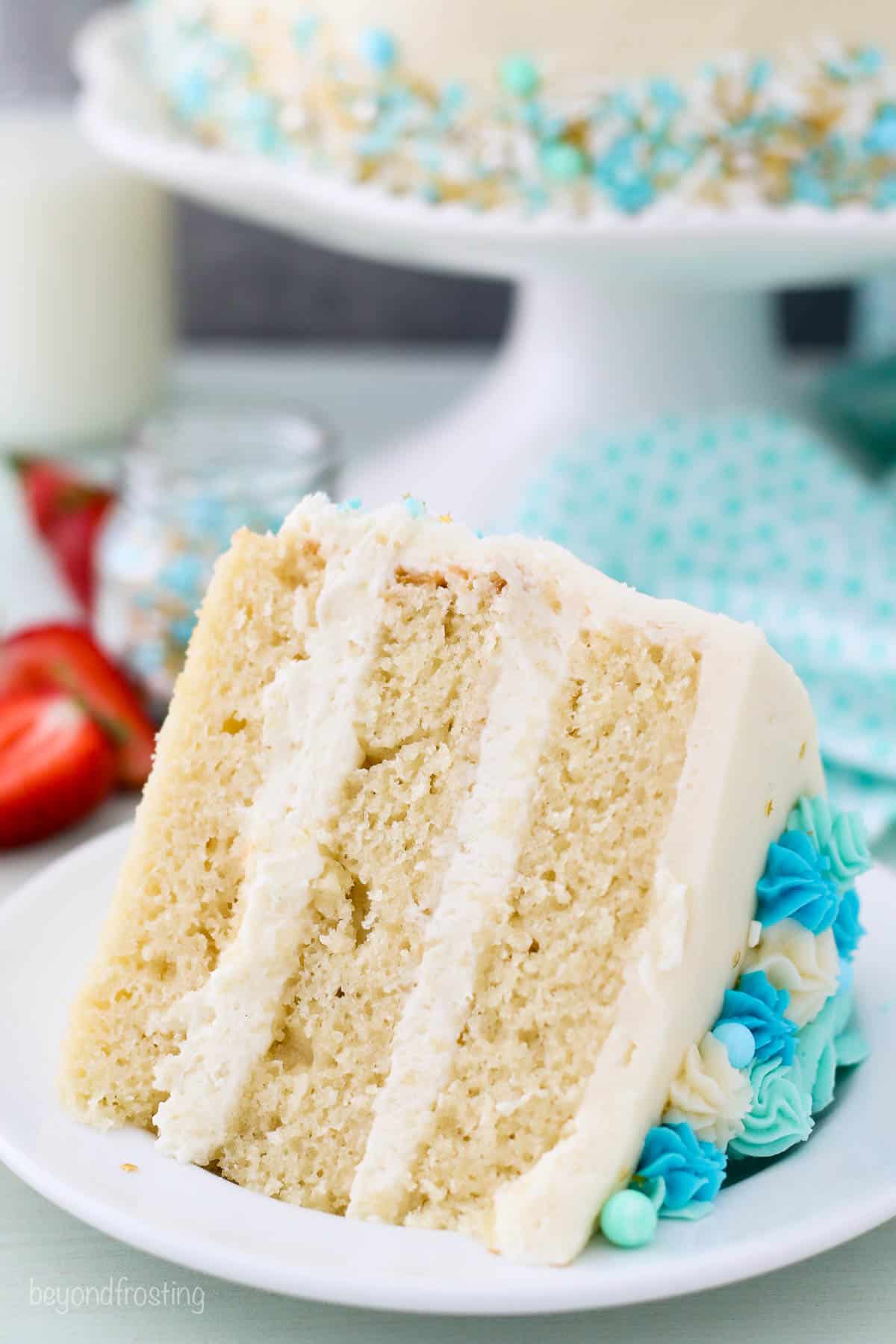
This is the perfect vanilla cake recipe! Thick layers of vanilla cake and my favorite vanilla frosting are a match made in heaven. It’s an easy recipe to make using oil instead of butter, which makes it super moist and spongy.
If you love vanilla cake, try it in my strawberry mascarpone cake or turn it into a cookies and cream cake.

Everyone needs a go-to, easy vanilla cake, especially if you’re making a layer cake. This is my moist vanilla cake adapted to make a stunning, three-layer cake with vanilla buttercream frosting. I’ve also made this recipe as a 6-inch mini vanilla cake and vanilla cupcakes. It’s one of the easiest cakes to make because it’s an oil-based cake recipe, so there’s no waiting around for the butter to soften or worrying about properly creaming the butter and sugar together. The oil also creates a more tender, fluffy crumb, especially when it’s paired with sour cream in the batter.
Of course, there’s plenty of rich vanilla flavor in this cake (no imitation vanilla here!), as there should be. If you’re looking for the best all-rounder vanilla layer cake, this is the only recipe you’ll ever need. Also, try my yellow layer cake and classic chocolate cake.
What Makes This the Best Vanilla Layer Cake?
- Soft yet stackable layers. The texture of this cake is denser rather than light and airy. It’s moist, spongy, and very stable for stacking the layers.
- Oil and sour cream in the batter. I use this combination in many of my homemade cakes. Sour cream makes the cake layers super flavorful and moist, while oil keeps them tender for days.
- A blank canvas for frosting and decorating. This cake holds up to just about any style and flavor of frosting, but my favorite is classic vanilla buttercream.
- The perfect back-pocket cake recipe. This vanilla cake is perfect for just about any occasion. Dress it up as an ombre cake for Valentine’s Day, or color it red, white, and blue for a 4th of July cake. Tint the frosting red or green for Christmas, or coordinate it with the colors for a baby shower or birthday party.
Ingredient Notes
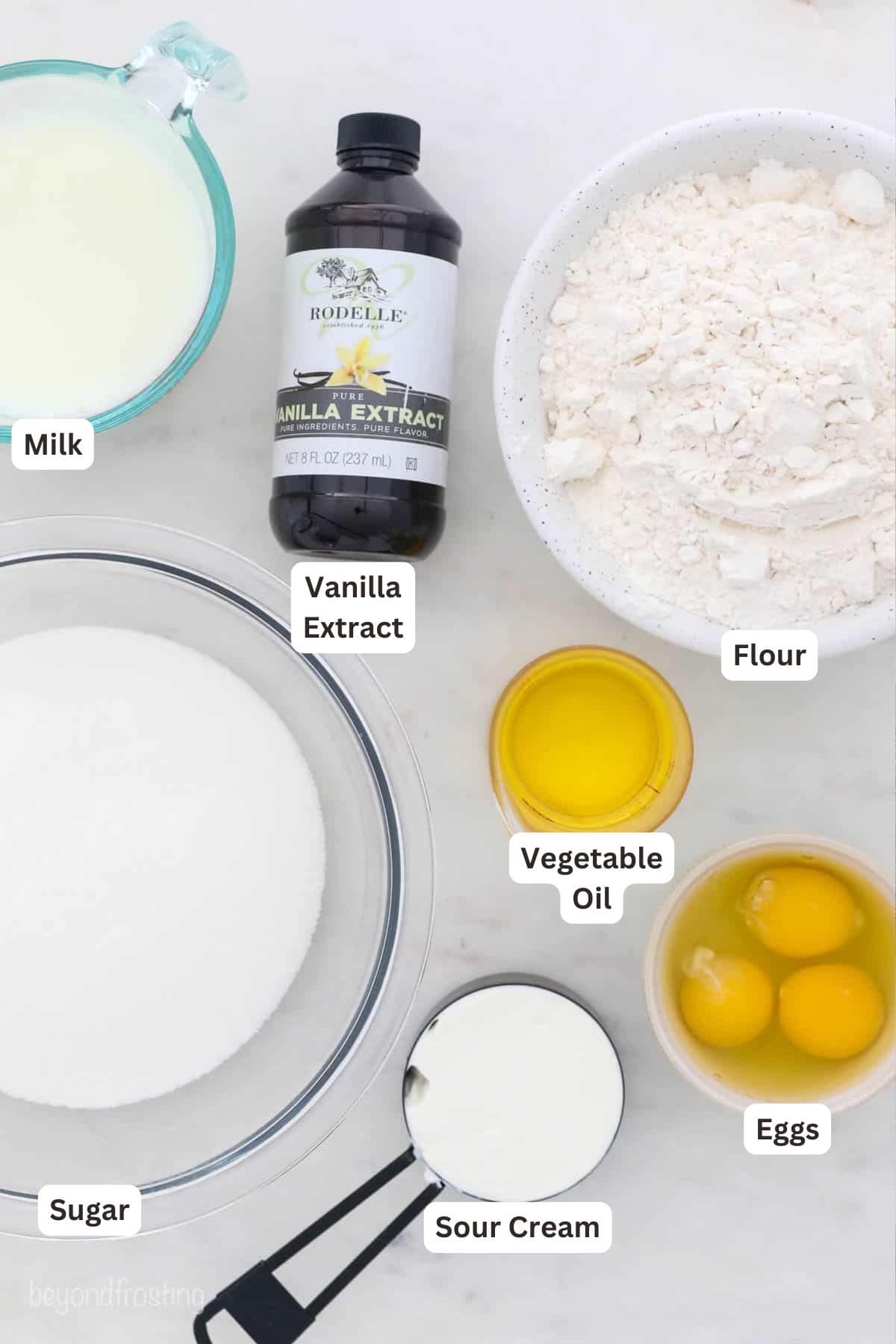
These are the important ingredients in the vanilla cake layers. Scroll to the recipe card for the printable recipe with the full list and exact measurements.
- Vegetable Oil – Oil contributes to the moistness and texture of this cake. Make sure it’s neutral-flavored.
- Vanilla Extract – High-quality, pure vanilla extract is a must for the best flavor. Avoid imitation vanilla since it’s… well, imitation.
- Sour Cream – Essential for keeping the cake moist. If you don’t have sour cream, I recommend substituting it with non-fat Greek yogurt.
- All-Purpose Flour – Measured correctly, either by weighing out the flour using a digital kitchen scale, or using the spoon and level method. Sift the flour afterward to remove any lumps. All-purpose flour is not interchangeable with cake flour in this recipe. I have, however, had success testing this vanilla cake recipe with a 1:1 measure-for-measure gluten-free flour when making my gluten-free vanilla cupcakes.
Bring Your Ingredients to Room Temperature
Bring fridge-cold ingredients like eggs, sour cream, and milk to room temperature before you make your vanilla cake batter. Room temperature ingredients are easier to mix, for a smoother batter and more even baking.
For the Vanilla Frosting
- Butter – The butter for the frosting should be unsalted and COLD. The extra time it takes to whip the butter to a softened consistency yields a smoother, more stable buttercream frosting.
- Powdered Sugar – Also called confectioner’s sugar. Powdered sugar is key for a thick, silky frosting that isn’t grainy.
- Heavy Cream – Or milk, to adapt the consistency of the frosting and make it creamy.
How to Make a Vanilla Layer Cake with Vanilla Buttercream
If you’re new to baking and assembling layer cakes, I recommend reviewing the step-by-step process in detail in my tutorial, how to make a layer cake. It’s very easy, and with practice you’ll be stacking this vanilla cake like a pro.
Bake the Cake Layers
Let’s start with prepping the pans and baking your vanilla cake layers.
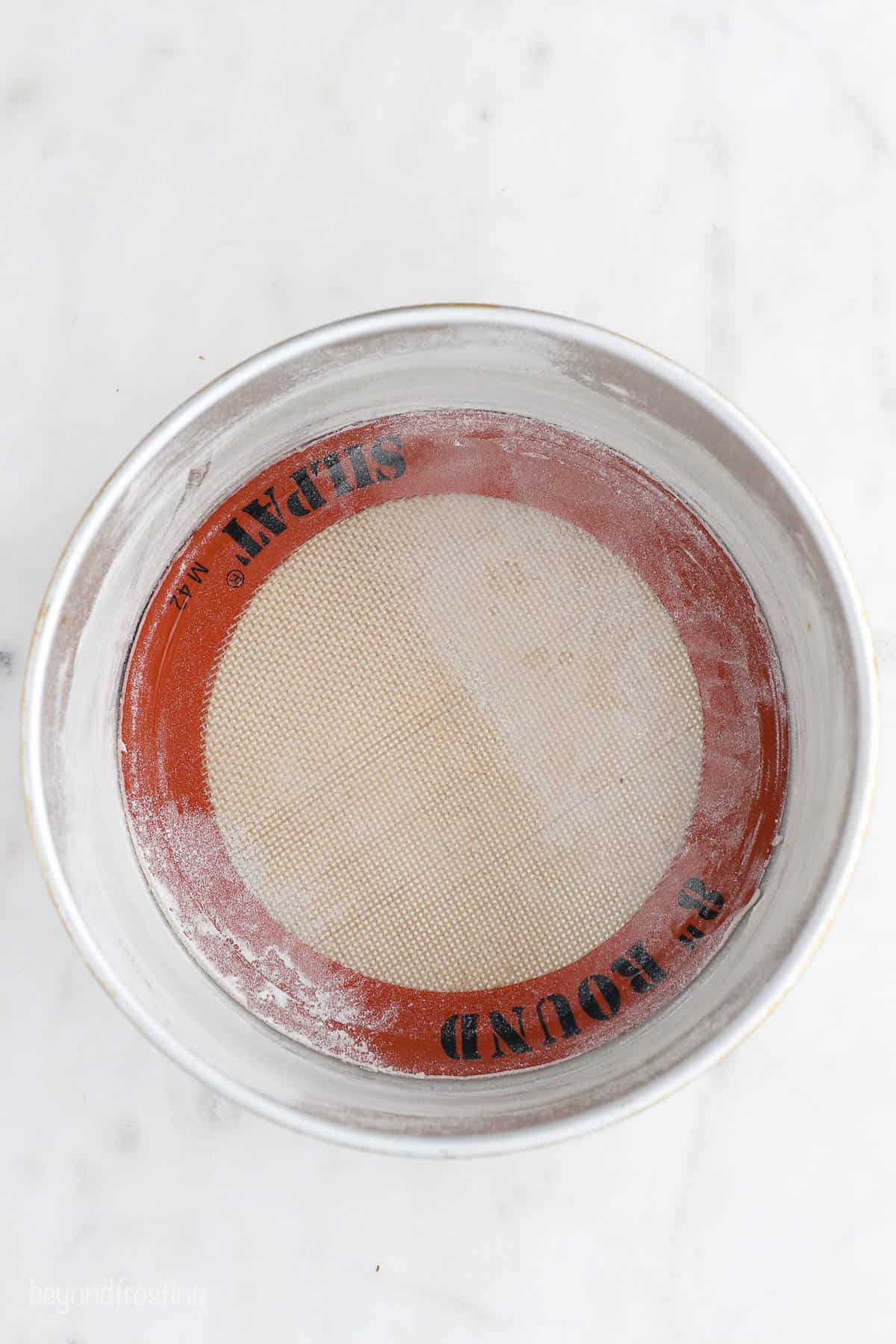
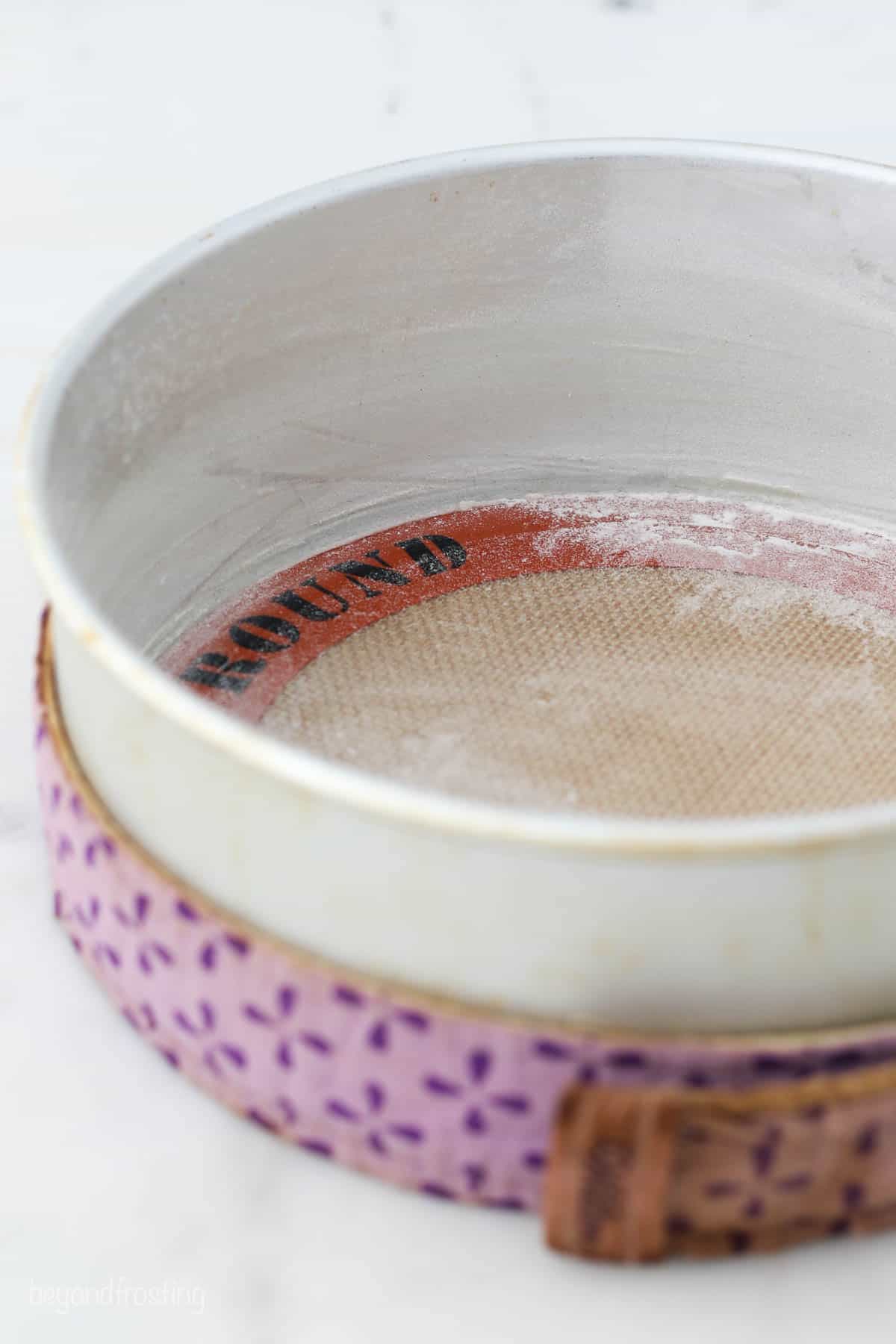
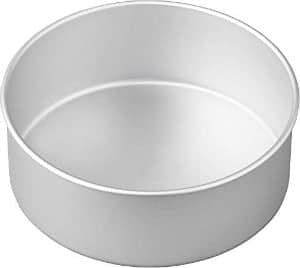
- Prepare the cake pans. First, generously grease and flour three 8-inch round cake pans. I like to use Crisco vegetable shortening as opposed to a cooking spray. Afterward, line the pans with parchment paper or a silicone baking mat. Properly prepping the pans ensures that the cakes don’t stick, and makes it much easier to remove them after baking.
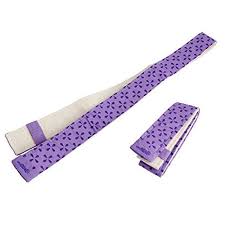
- Add bake-even stripes (optional). I love using bake even stripes because it helps the cake layers to bake flatter. Without them, the edges of the cakes bake quicker, causing the centers to dome. You’ll notice the outside edges of the cake are also a little darker without them. Bake even stripes should be very wet when applied to the outside edge of the pan.
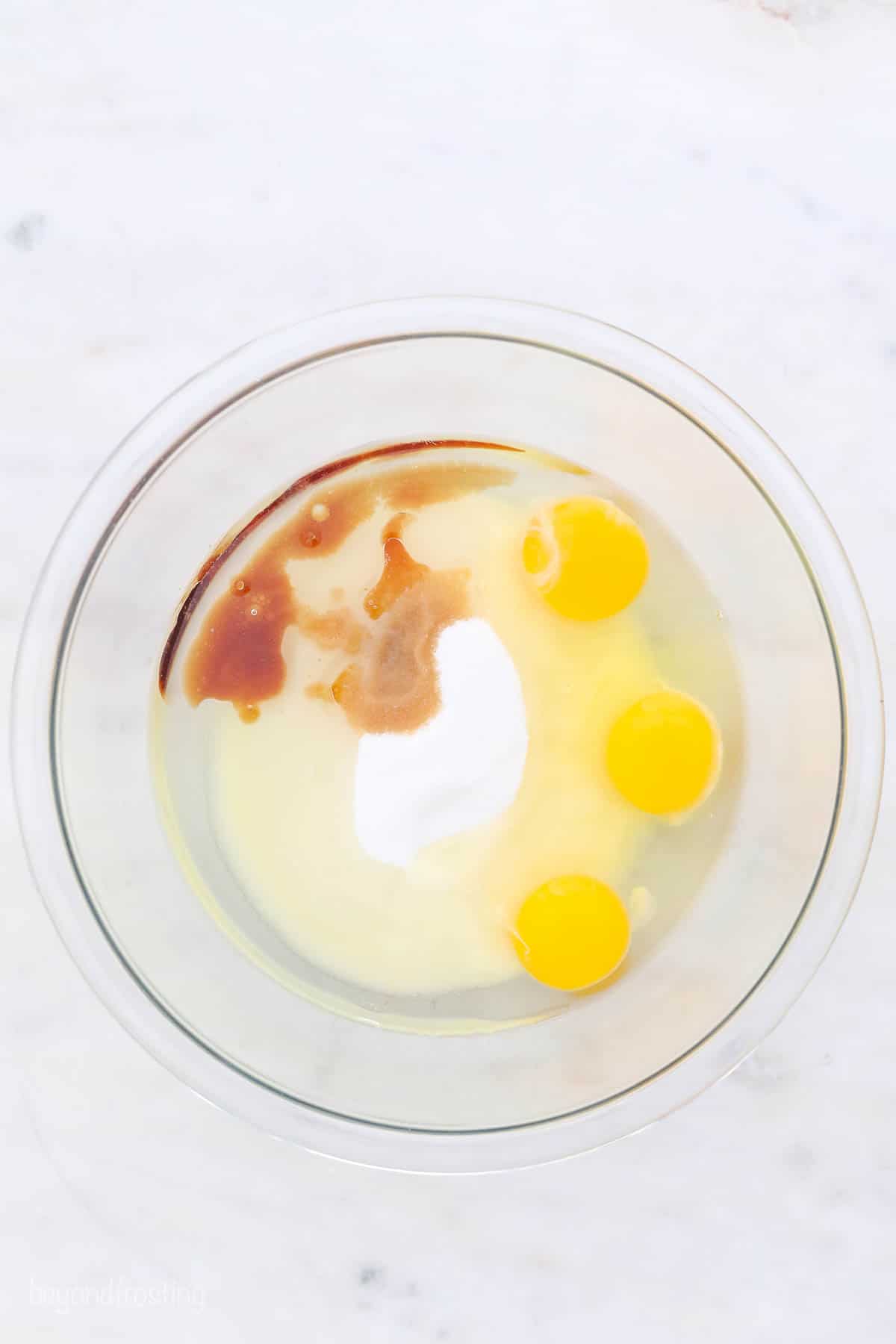
- Mix the wet ingredients. With your pans prepped, beat together the sugar, vegetable oil, eggs, and vanilla extract in a mixing bowl. Add the sour cream and mix well.
- Combine and add the dry ingredients. Next, whisk the dry ingredients together. Add half of the dry ingredients to the wet batter, followed by half of the milk, and mix just until the flour starts to incorporate.
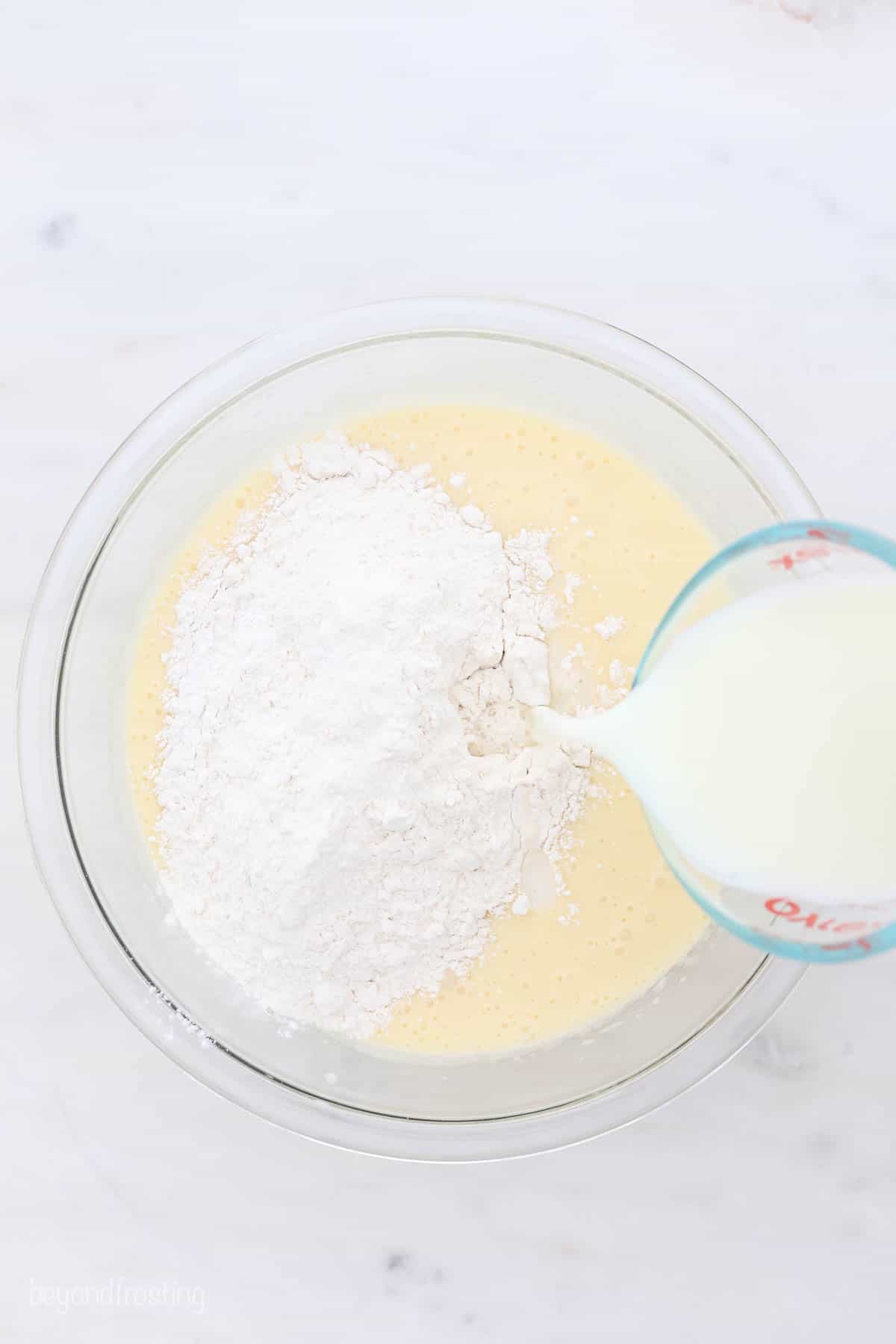
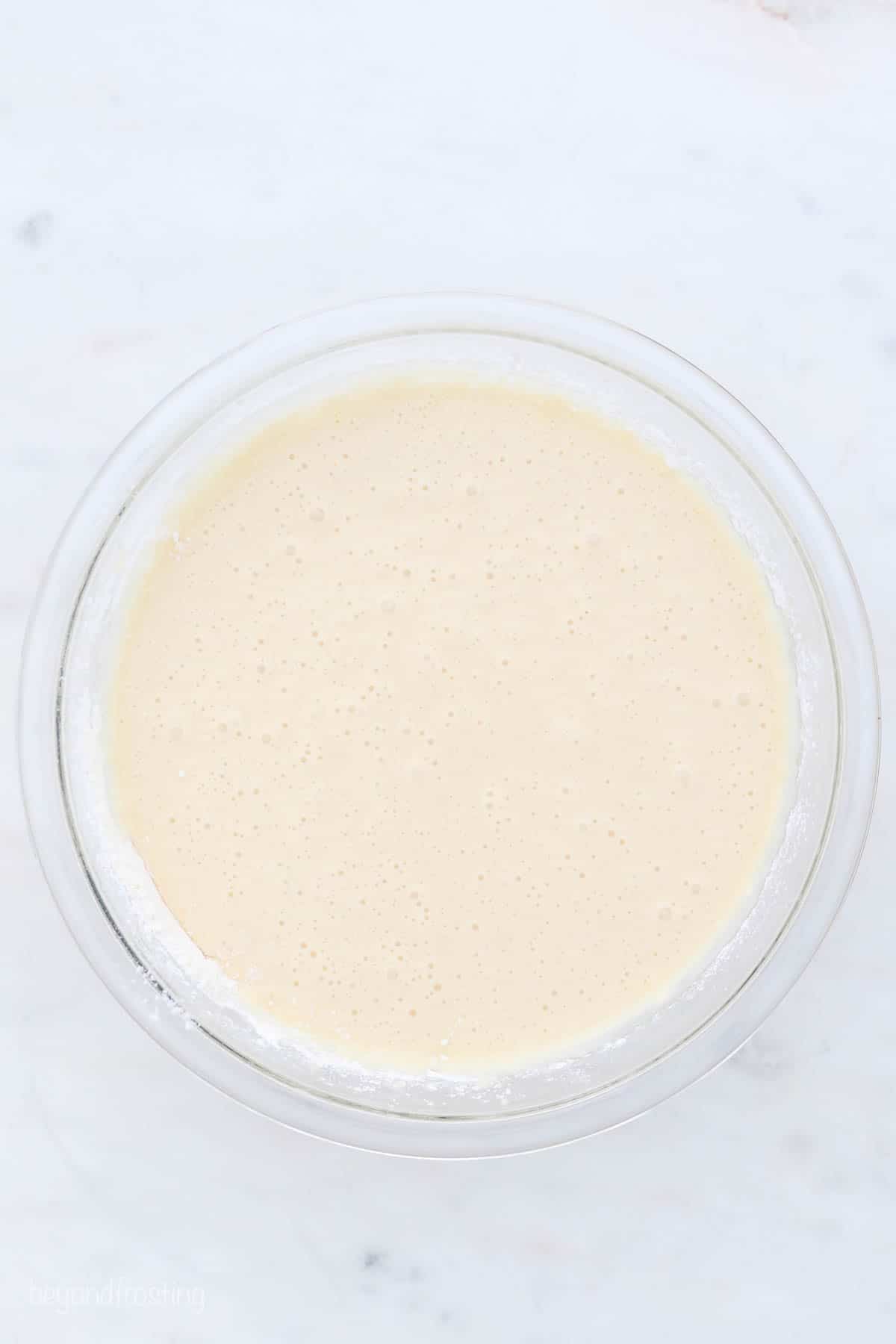
- Finish the batter. Then, add the remaining dry ingredients and milk. Beat the cake batter on low speed until it’s just combined. Do not overmix.
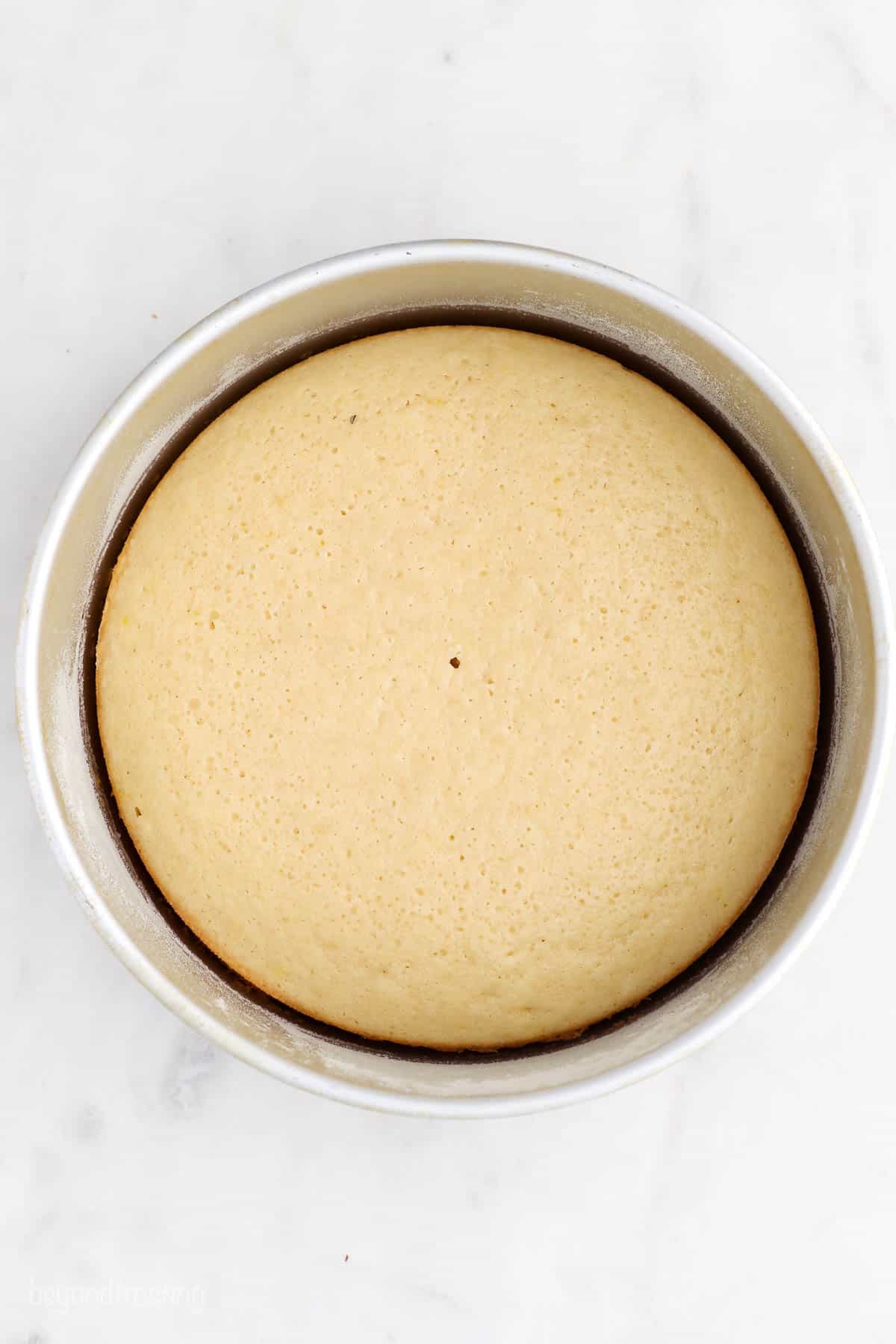
- Fill the pans and bake. Lastly, divide the batter evenly between the three pans (about 1 ⅔ cups per cake pan). Bake the cakes at 350°F for 20-23 minutes, rotating the pans halfway through. The vanilla cakes will need to cool completely before you frost and stack them.
Frosting and Assembling the Cake
For this classic cake, you’ll need quite a bit of frosting. Besides the filling in between the layers, you’ll need extra frosting for decorating. You won’t have to worry about running out of frosting!
- Make the frosting. Cut the cold butter into pieces, and whip it for 5-7 minutes, until lighter in color. Next, add the powdered sugar, 2 cups at a time, alternating with the vanilla extract and heavy cream. Mix well in between each addition, then whip the frosting on medium-high speed for 3-5 minutes until it’s smooth and airy.
- Stack the cakes. Use a cake leveler or a serrated knife to trim any domes from the cooled cake layers, and fill a piping bag with about 2 cups of vanilla frosting (see how to use a piping bag). Starting with the first cake layer, pipe and spread a layer of frosting evenly over the cake. Place the second layer on top, and repeat, ending with a third and final cake layer.
- Add a crumb coat and frost the cake. Finally, fill any gaps between the layers and smooth the frosting over to make a crumb coat. Then, use the remaining frosting to cover the top and sides of your layer cake.
Frosting Options for a Vanilla Layer Cake

Instead of vanilla frosting, you can frost your vanilla layer cake with any of the homemade frosting recipes on my site, including these popular choices.
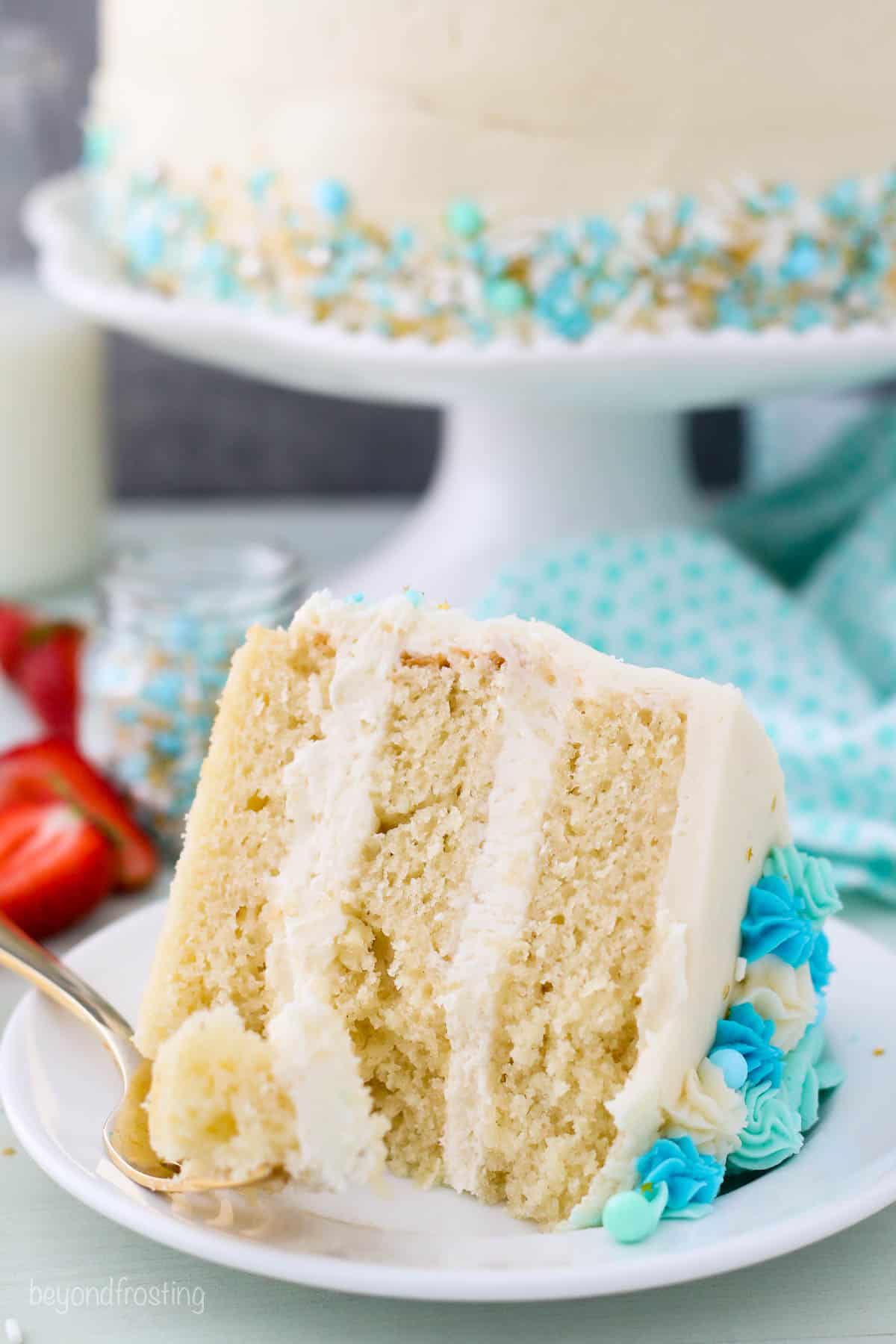
Coloring the Buttercream Frosting
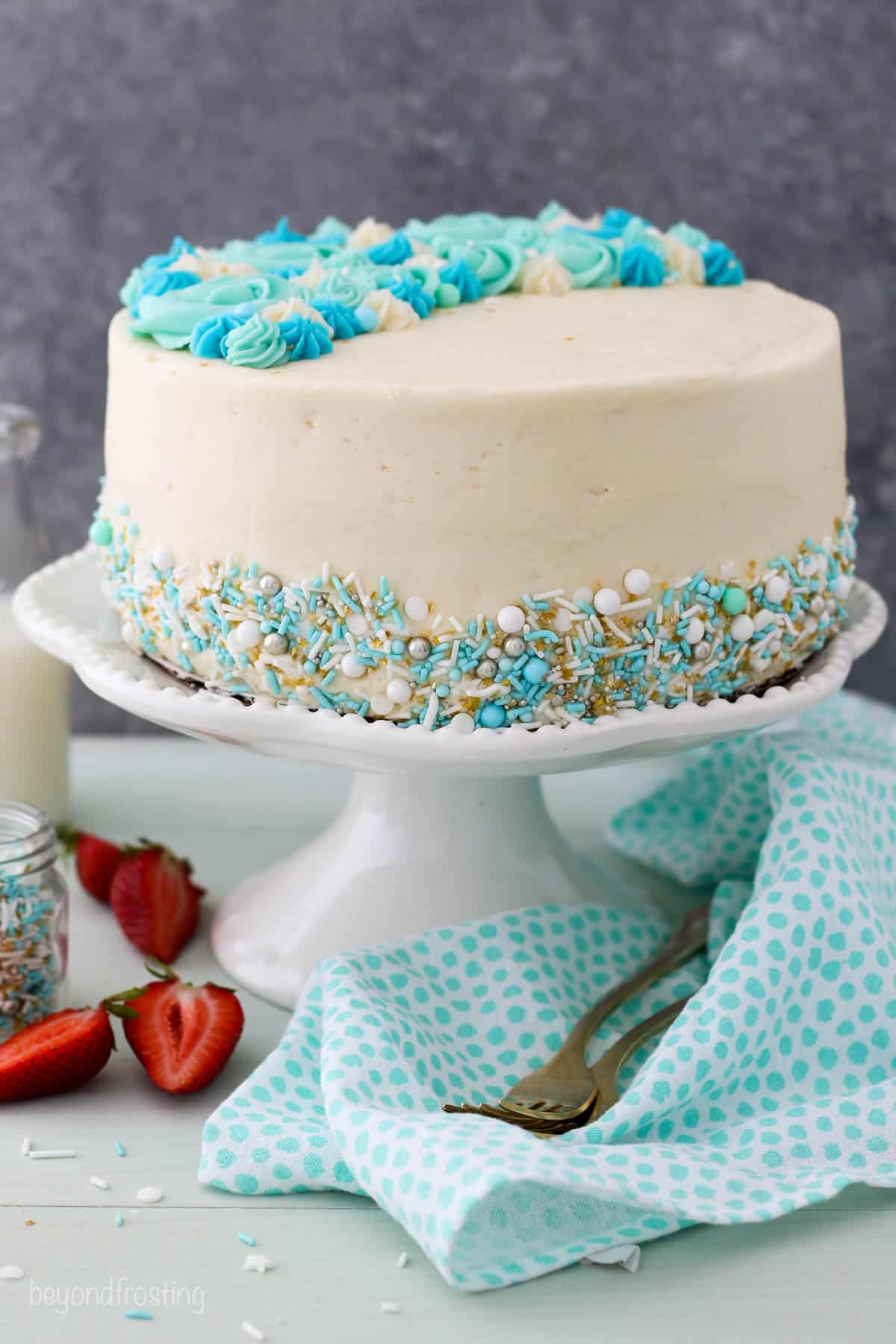
My favorite gel food dyes include the Wilton Color Right Food Gels or AmeriColor Gels. For this vanilla layer cake, I divided the frosting into three bowls and colored two of them shades of blue, leaving the last bowl uncolored:
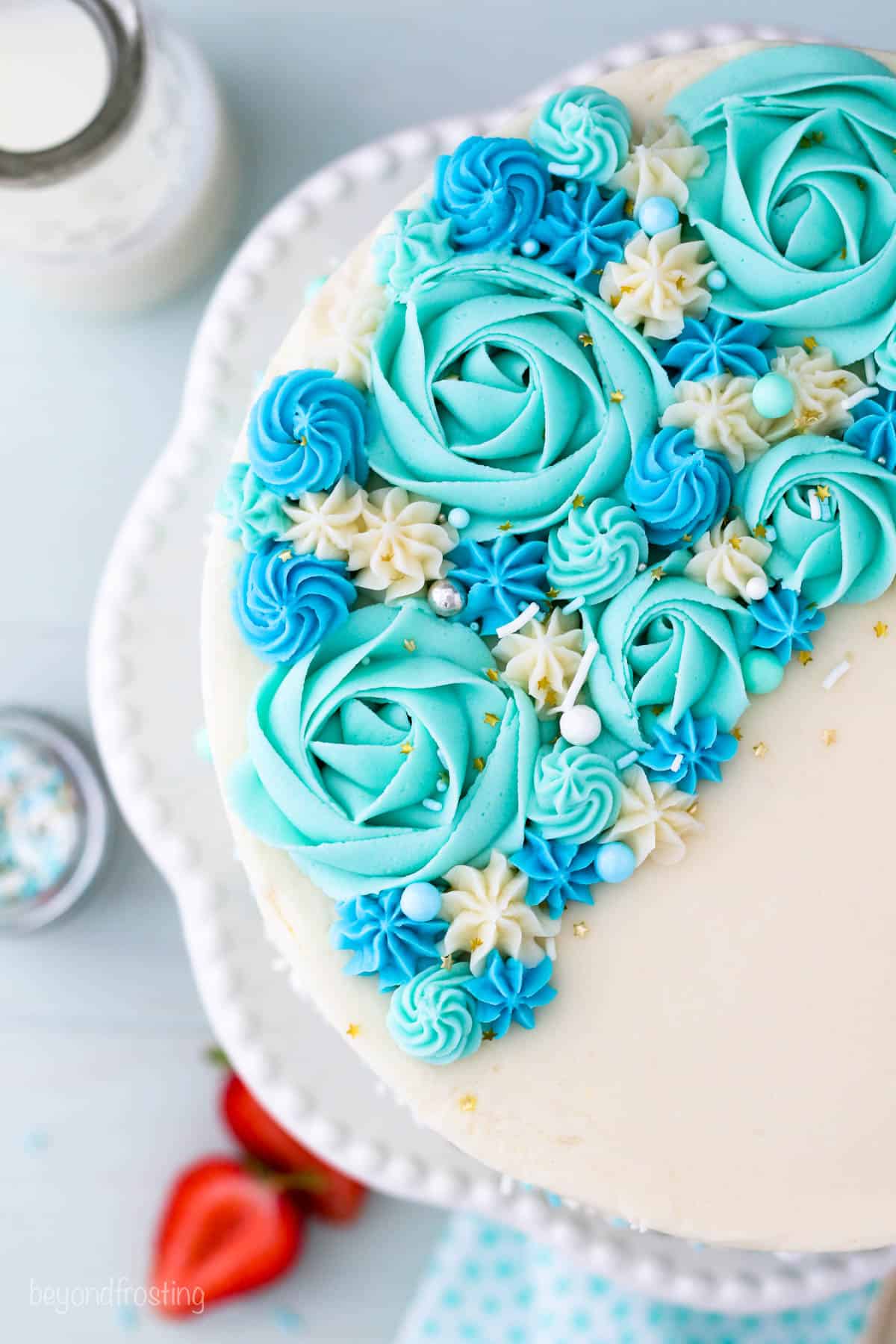
- 1 cup of frosting for the roses (AmeriColor teal)
- ½ cup for the darker blue color
- ¼ cup of the white, undyed frosting
The best way to dye frosting in different shades is to start with half a drop in one bowl and then get progressively darker. Just remember that you only need a TINY bit of gel to color in these small amounts of frosting. It’s helpful to use a toothpick to add small amounts to your bowls at a time, so you don’t add too much. For more helpful tips on coloring buttercream, see my in-depth guide, how to color buttercream.
How to Decorate a Layer Cake
If you’re not fully comfortable with piping frosting, check out my full tutorial on how to use piping tips and the techniques used in my buttercream flower cake. I also recommend doing a few “test runs” by piping the frosting onto clean parchment paper before you take your skills to the cake. You can even reuse the frosting by scraping it back into your piping bag.
If you’re just starting out, this is a super approachable way to decorate a cake. Here are some of the tools I used:
- 1M Piping Tip: Start by piping your roses, and then fill in the open spaces with the stars and rosettes.
- Open Star Tips: Size 18 and Size 21 can be used to create a variety of shapes and rosettes.
If you use your piping bags with couplers, you can easily switch out the tips with the different frosting colors. These can be purchased at stores like JoAnn Fabrics, Michael’s, a cake supply store, or online.
Baking in Different Pan Sizes
This recipe has been used for several other size pans without adapting the cake batter or baking temperature. Just use a toothpick to test the cakes for doneness at the earliest suggested times. You may also need to scale the frosting recipe accordingly.
- Two 9-inch cakes: Bake at 350ºF for 28-32 minutes. The baking times vary due to how full the pans are, the type of pans you’re using and the true oven temperature. Please note these 9-inch cakes did “crust” a little more on the outside edge due to extended baking times and they rose quite a bite in the middle, so you’ll lose more of the dome when you trim the cakes afterward.
- Two 8-inch cakes: Divide the batter evenly, about 2 ½ cups per pan. Bake for 28-32 minutes.
- 6-inch cakes: A full recipe will make four 6-inch layers, filling each one with about 1 ⅓ cup of batter. Bake for approximately 24-30 minutes. You can halve the recipe for a mini two-layer cake.
- Two 10-inch cakes: I’ve never tested this with 10-inch pans myself, but I would recommend making 2 layers so you still have nice, thick cake. Trying baking for 15-20 minutes and assessing if additional time is needed.
How to Store a Layer Cake
- Store the cake covered. The best option is to use a cake carrier which allows the cake to be kept airtight, locking in the moisture. You can also slice the cake and store it in a Tupperware container.
- Refrigerate as needed. You do not have the refrigerate this cake unless you live in a hot or humid environment. If you need to refrigerate the cake, try to do so in an airtight container. If it’s already sliced, then I recommend placing plastic wrap up against the sliced edge to help prevent it from drying out. It’s best to serve at room temperature, so remove the cake in plenty of time prior to serving.
- Freeze the unfrosted cake. I normally don’t freeze a decorated cake. I’d recommend freezing the layers and frosting in advance, and then thawing and decorating when ready. Place a piece of parchment paper on the top and bottom of the cake layer, double wrap the cooled layers in plastic wrap.
More Easy Layer Cake Recipes
Moist Vanilla Layer Cake
- Prep Time: 90 minutes
- Cook Time: 20 minutes
- Total Time: 1 hour 50 minutes
- Yield: 10-12 slices
- Category: Cake
- Method: Baked
- Cuisine: American
Description
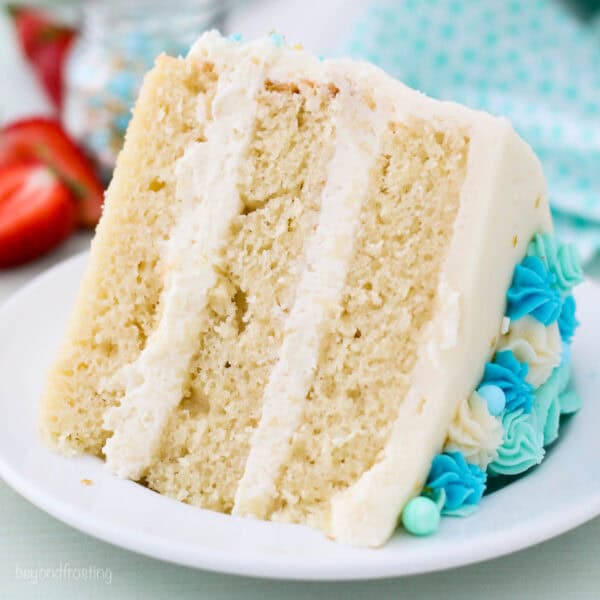
This is the perfect vanilla layer cake recipe! With three thick layers of vanilla cake and my favorite vanilla buttercream frosting. It’s an easy recipe to make using oil instead of butter, for a super moist and spongy cake.
Ingredients
For the Cake:
- 2 cups (380g) granulated sugar
- ½ cup (118 ml) vegetable oil
- 3 large eggs, at room temperature
- 1 tablespoon (14.8 ml) pure vanilla extract
- ½ cup (120g) sour cream at room temperature
- 2 ½ cups (350 g) all-purpose flour, sifted
- 3 teaspoons (11.2 g) baking powder
- 1 teaspoon (5 g) salt
- 1 ¼ cups (296 ml) milk (any type) at room temperature.
For the Frosting:
- 2 cups (453g) unsalted butter, cold
- 7–8 cups (910-1041g) powdered sugar
- 1 tablespoon (15ml) vanilla extract
- 2–3 tablespoons (30-44ml) heavy whipping cream (or milk)
- Pinch of salt
Instructions
For the Cake:
- Preheat the oven to 350°F. Prepare three 8-inch round baking pans, line the bottom with parchment paper, and grease the sides. Prepare with bake-even strips if desired.
- In a large mixing bowl, combine the sugar, vegetable oil, eggs, and vanilla extract. Beat on medium speed until well incorporated. Scrape down the bowl as needed. Next mix in the sour cream and beat until well combined.
- In a separate bowl combine the remaining dry ingredients and sift together the flour, baking powder, and salt. Add half the dry ingredients, and half the milk, and beat on low speed just until the flour starts to incorporate. Repeat until all ingredients are added and combined. Use a spatula to scrape down the sides of the bowl and stir the batter from the bottom to the top to ensure it’s well mixed.
- Divide the batter evenly between the three pans, about 1 2/3 cups of batter per pan. Bake at 350°F for 20-23 minutes. Rotate your pans in the oven halfway through baking (around 10 minutes). Test the cake for doneness by inserting a toothpick into the center of the cake. If the toothpick comes out clean, the cake is done. Remove from the oven and allow to cool completely.
For the Frosting:
- Cut butter into pieces. Using the paddle attachment, whip the butter for 5-7 minutes, scraping down the bowl occasionally. Beat until the butter looks light in color.
- Alternate adding 2 cups of powdered sugar at a time with the liquid ingredients: vanilla extract & heavy cream. Ensure the powdered sugar is well combined, then and whip for 1-2 minutes before adding more powdered sugar.
- Once all the powdered sugar has been added, increase speed to medium-high and beat for another 3-5 minutes to whip additional air into the frosting.
To Assemble the Cake:
- Use a cake leveler I cut the domes off the top of the cake. Place a dollop of frosting on your cake board and place the bottom layer of cake on top of that.
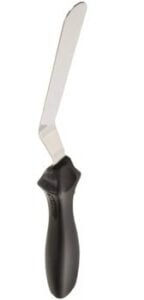
- Place about 2 cups of frosting in a large piping bag fitted with a large open round tip, or simply cut off the end of the piping bag. Pipe a layer of frosting on top of the cake, starting at the outside edge and working your way into the middle. Spread evenly with an offset spatula. Repeat with the second layer of cake and then place your third layer on top.
- Use your piping bag to fill in any gaps between your layers and to create a crumb coat. Using an offset spatula or icing smoother, wipe away the excess frosting, leaving you just enough to coat the outside of the cake. Do not mix your crumb-coating frosting back into your icing if it has cake debris in it.
- Proceed to frost the top and sides of the cake using your offset spatula. Once the sides of the cake are covered, use you icing smoother to remove any excess frosting.
To Decorate:
- Use your hands to press the sprinkles into the sides of the cake. It’s best to do this over a sheet pan lined with parchment paper, allowing you to easily capture and reuse the sprinkles that fall off the cake.
- Take your leftover frosting and separate into 3 bowls: 1 cup, ½ cup and ¼ cup of white frosting (undyed). Dye 2 bowls with you desired color, and leave 1/4 cup of frosting uncolored.
- In a small piping bag, use a 1M piping tip to pipe the large roses on top of your cake.
- Place the other frosting in two small piping bags, fitted with a coupler and size 18 or size 21 tips, fill with your other color and the white frosting. Fill in the negative space with a mix of stars and small rosettes.

Notes
Adjusting the cake sizes:
-
- For two 9-inch cakes, they baked from 28-32 minutes. Baking times will vary due to how full the pans are, type of pans, and true oven temperature. Please note these did “crust” a little more on the outside edge due to extended baking times and they rose quite a bite in the middle, so you’ll lose more of the “dome” of the cake.
- For two 8-inch pans: divide the batter evenly, about 2 1/2 cups per pan. Bake for 28-32 minutes.
- For 6-inch pans: a full recipe will make four 6-inch layers, filling each one with about 1 1/3 cup of batter and baking for approximately 24-30 minutes. Here is the mini 2-layer version.
- For 10-inch pans: I’ve never tested this with 10-inch pans, but I would recommend a 2 layer cake so you still have nice thick layers. Trying baking for 18-20 minutes and assessing additional time needed from there.
Ingredients Substitutions
- Sour cream substitute: Substitute with non-fat Greek Yogurt if you do not have sour cream.
- Milk: Any type of milk can be used (full, reduced or low-fat)
- Oil substitutes: I have tested substituting 1/2 cup melted butter in place of the oil. The cake still bakes just fine but I prefer the texture of the cake make with oil.
Preparing and Storing:
- The best option is to use a cake carrier which can allow it to be stored in an airtight container. You do not have the refrigerate this cake unless you live in a hot a humid environment. This is best served at room temperature. Cake layers can be prepared up to 2 days before serving. Cool completely and wrap tightly with plastic wrap or store in an airtight container.
Nutrition
- Serving Size: 1 slice
- Calories: 944
- Sugar: 113.4g
- Sodium: 384.2mg
- Fat: 43.6g
- Saturated Fat: 28.4g
- Carbohydrates: 135.8g
- Fiber: 0.7g
- Protein: 5.9g
- Cholesterol: 135.9mg
Literally the best recipe! I get so many compliments. If I use vanilla or almond vanilla combo. It hold us great as layered/tiered cake and adding Oreos to it…mind blowing.
Hi MaryK! I’m so glad you enjoyed the cake and hope you can make it again soon.
Hi thank you you for sharing an easy and great recipe but I was wondering if I could add white chocolate inside cake normal the batter to make a white chocolate cake if so when should I add it??
Hi, will this cake recipe work well under fondant?!
Hi Gina, It’s a very stable cake. However I don’t cover cakes in fondant and I’d recommend testing it before accepting any orders or preparing for an event. The cake is very moist.
If you’re looking for an easy but delicious cake recipe, your search is over. I’ve been using other recipes for a while but they all had either buttermilk or cake flour in them, things I don’t always have in the house. This recipe uses
pantry staples and it’s so moist and delicious. I tried it out for my daughter’s 2nd birthday cake and it got so many compliments. Although I did cut the sugar down to a cup and a half. I made 3 six inch cakes to make a layer cake and had a bit left over for some cupcakes. The cake is now 2 days old and it’s still so soft even right out of the fridge. I will be using this recipe all the time now for birthdays. It’s perfect with an ermine frosting so a light but not too sweet combination.
Hi Ali, thank you so much for making my vanilla layer cake recipe! I really appreciate your kind review and so glad it turned out well for your daughter’s birthday. Thanks again 🙂
An you use this recipe for cupcakes
Hi Julie- yes you can use these for cupcakes- here you go https://beyondfrosting.com/moist-vanilla-cupcakes/
Excited to make it again!
I’m glad you enjoyed!
Cake was very sweet I would cut back 1/4 cup on the sugar
You can do that if you need to, the results are slightly different than my intentions
This is a great recipe! I added 1/2 teaspoon of baking soda and xtra teaspoon of vanilla. It’s flavorful, light and fluffy.. I did not do the frosting for I have my own I prefer to use. Ty for sharing this… it is definitely going to be my “go to” vanilla cake from here on! 🍰🎂
Thank you Christine! I appreciate that so much!
My go to recipe. Do I need to double this recipe to make a half sheet cake?
Hi Tammy, I have not baked that size but I would probably double it for a thicker cake
I absolutely love this recipe, I’ve been looking over the last 5 years for a vanilla cake recipe that actually stayed moist. It’s day 4 and I am happy to say it stood the test ( will be tossing for safety purposes lol). I steamed the cake layers and they came out perfectly! Thank you so much!!!
That is amazing and exactly what I love to hear! Thank you!
Hi there! Could I use olive oil instead of vegetable oil for the cake?
Yes that should work
Hi could I use buttermilk instead of regular milk? Thank you.
When swapping out the buttermilk, you would need to reduce the baking powder and add some baking soda. In a similar recipe, I do 2 tsp baking powder and 1 tsp baking soda