

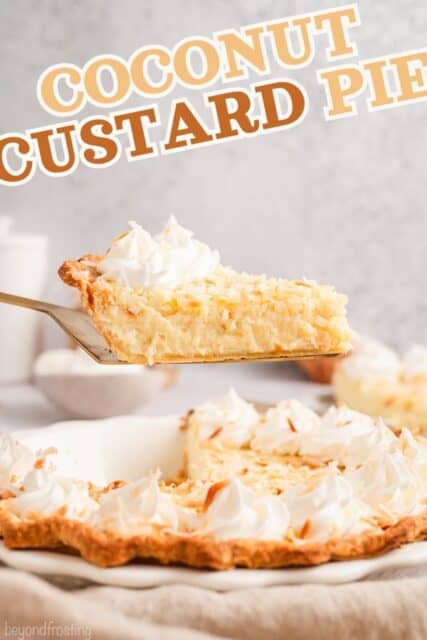
This old-fashioned coconut custard pie is easy to make, with plenty of shredded coconut baked into a melt-in-your-mouth homemade custard. Set in a flaky pie crust, every bite is deliciously toasty and big on coconut flavor. Best of all, this coconut custard pie comes together quickly, without tempering the eggs or blind-baking the crust!
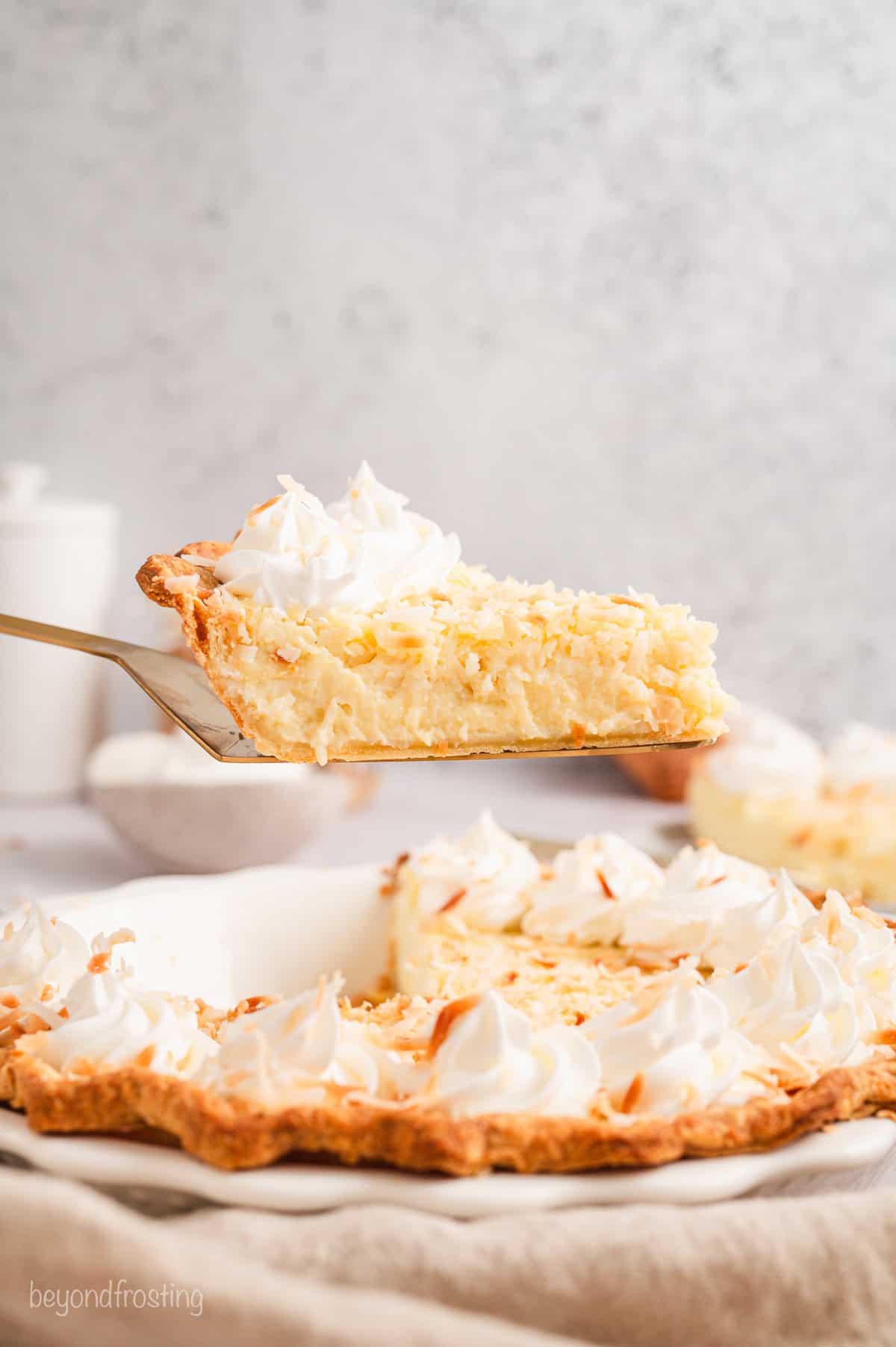
This creamy coconut custard pie is rich, silky, and packed with coconut, baked in a buttery crust. I adapted it from a cookbook printed in 1937 (one of my favorites!). The recipe uses simple ingredients, and the pie filling tastes like the creamy custard in my coconut custard cake.
I’ve put my spin on this pie throughout the years. In addition to doubling the amount of coconut flakes from the original recipe, I make the filling with coconut milk and a dash of coconut extract to really amp up the flavor.
Unlike traditional custards that need tempering on the stovetop, the coconut custard works its magic in the oven. Just mix up the filling, pour it into the crust, and bake. It makes this coconut custard pie an easier option compared to banana cream pie or chocolate pie. I love this coconut custard pie served chilled in the summertime, but it’s a delicious holiday dessert year-round, topped with whipped cream!
What Makes This the Easiest Coconut Custard Pie Recipe?
- No tempering. The eggy custard ingredients can go straight from the bowl to the pie crust, and into the oven.
- There’s no blind-baking the pie crust, which makes preparing the pie even quicker.
- Custard pie is a great make-ahead dessert for special occasions and holidays. It needs time to chill in the fridge.
- Baking high, then low helps kickstart the cooking process, for a foolproof coconut custard pie that’s rich, creamy, and silky-smooth.
Ingredient Notes
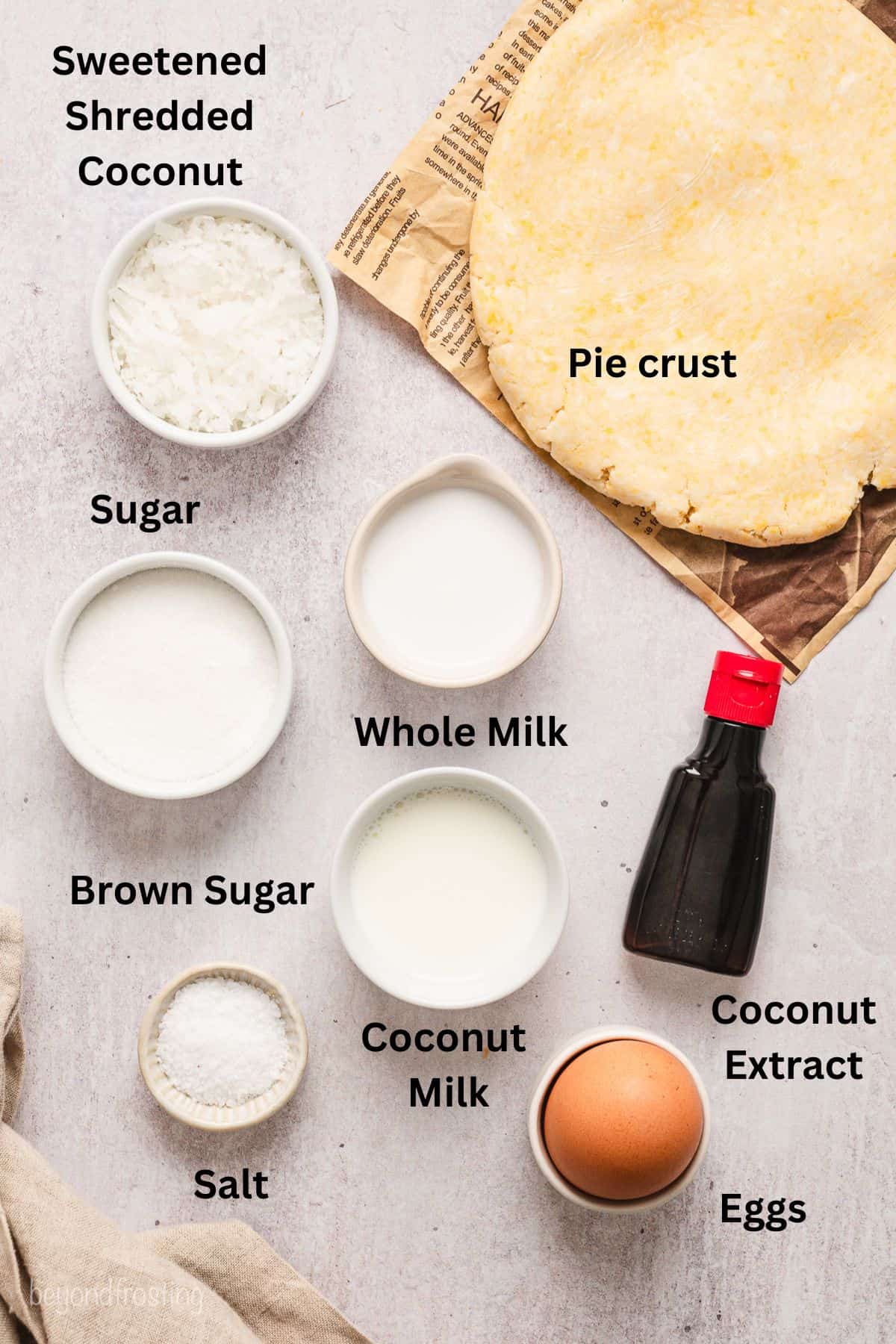
The melt-in-your-mouth texture in this coconut custard pie comes down to a few key ingredients, which I cover here. Scroll down to the printable recipe card for the full list and recipe amounts.
- Pie Crust – Use a ready-to-bake pie crust from the store, or try my favorite homemade pie crust. The recipe makes a double crust, so I usually end up freezing one for later. I also have a gluten-free pie crust that you can use.
- Eggs – Eggs form the base of the custard filling. Lightly beat them before you start.
- Coconut Extract – If you can’t get your hands on coconut extract, you can use vanilla extract (not artificial vanilla) in its place.
- Milk – You can use any milk you have on hand, but whole milk is preferred.
- Coconut Milk – Make sure you’re buying canned coconut milk or coconut cream, and NOT cream of coconut, which is sweetened. Since coconut milk tends to separate in the can, give it a good stir.
- Shredded Coconut – This can be sweetened or unsweetened. For a deeper flavor, you can toast the coconut for the pie filling. It’s easy to toast coconut on the stovetop over low heat until it browns (stir often so it toasts evenly), or you can toast shredded coconut in the oven for 5 minutes.
How to Make Coconut Custard Pie From Scratch
This pie can be made in a standard 9-inch pie dish. Follow the steps to prepare your coconut custard pie here, and scroll to the recipe card for the printable instructions.
- Prepare the crust. Get your choice of homemade or refrigerated pie crust rolled out and pressed into a pie plate, then trim and flute the edges. Return the crust to the fridge while you prepare the filling. It’s better to work with it cold.
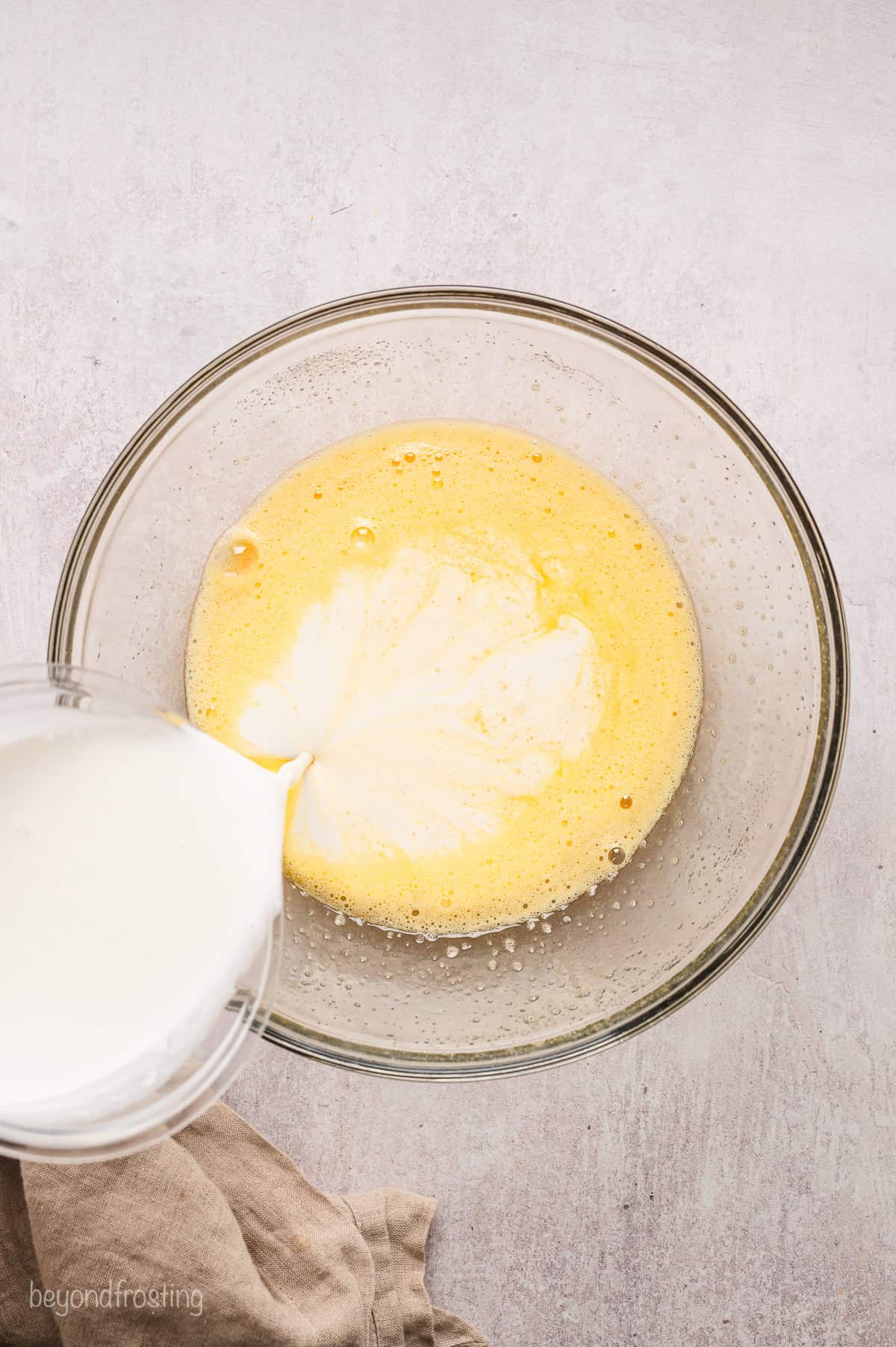
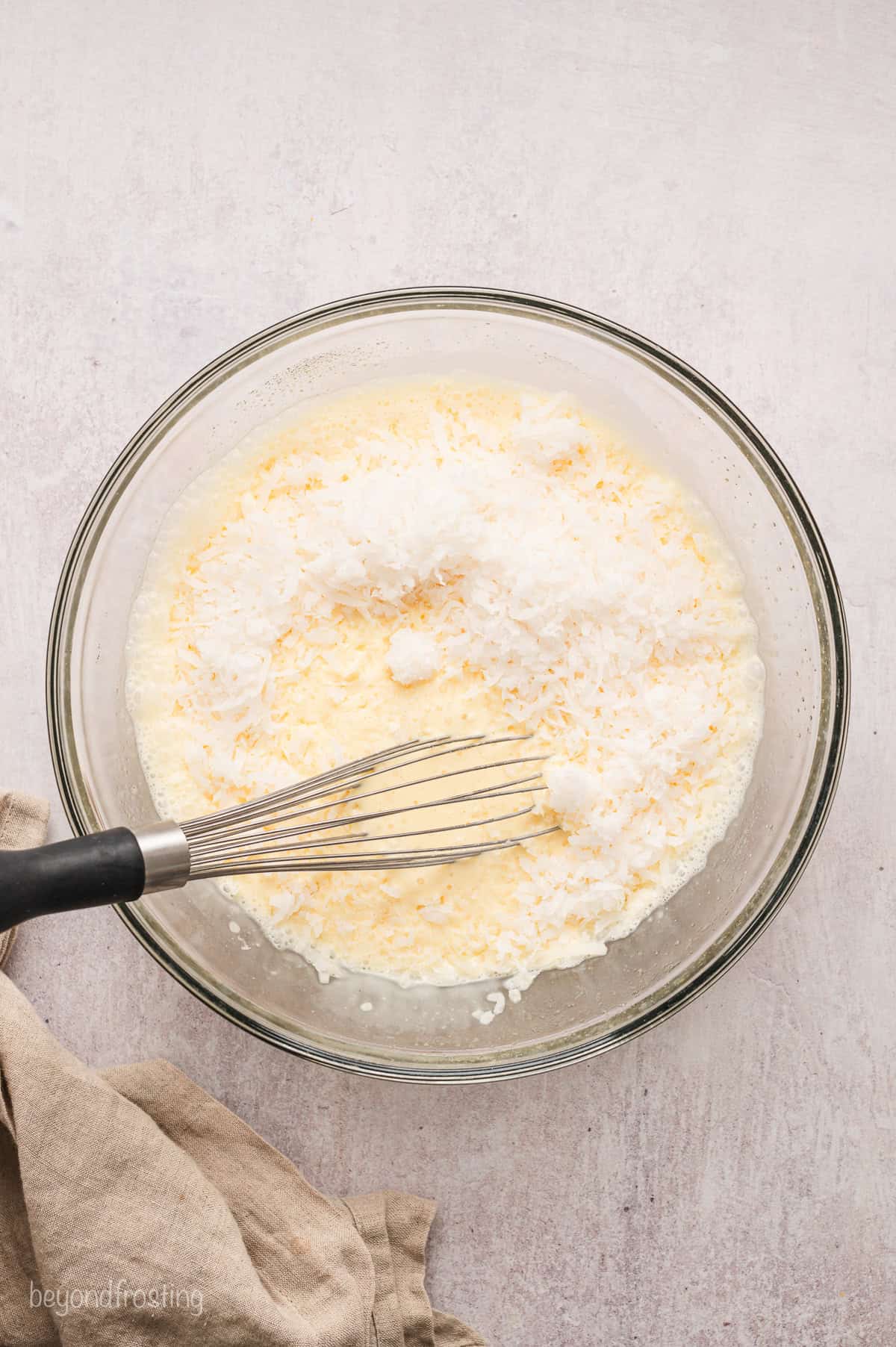
- Make the custard. To make the pie filling, start by whisking the eggs with sugar and salt. Once that’s frothy, add coconut extract, milk, and the stirred coconut milk. Finally, fold in the shredded coconut.
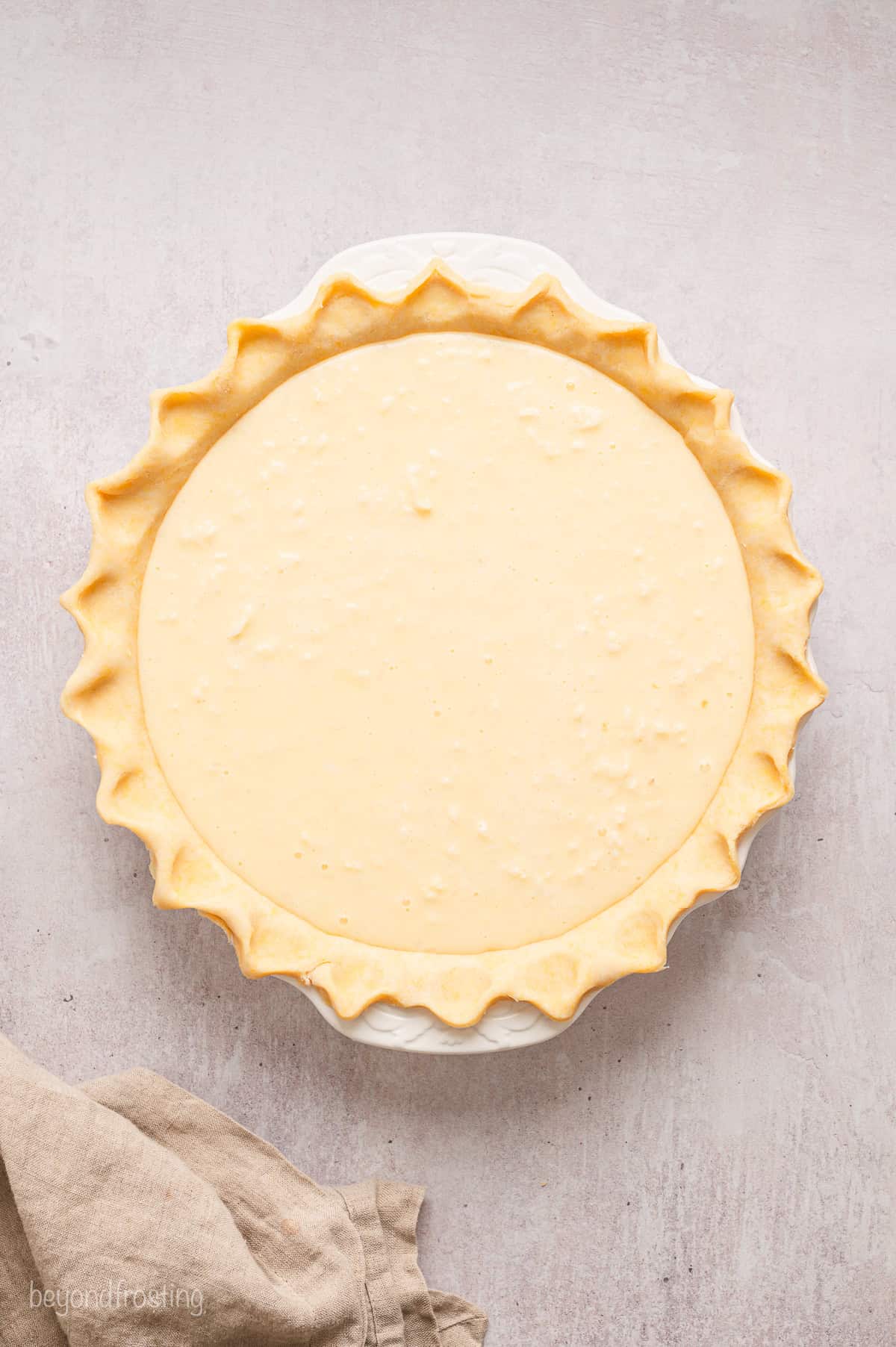
- Bake. Pour the filling into the prepared pie shell. Bake the pie on the lower rack of your oven for 20 minutes at 450ºF, and then another 20-25 minutes at 350ºF. Cover the crust with foil or a pie shield during the second half of the baking time to avoid burnt edges.
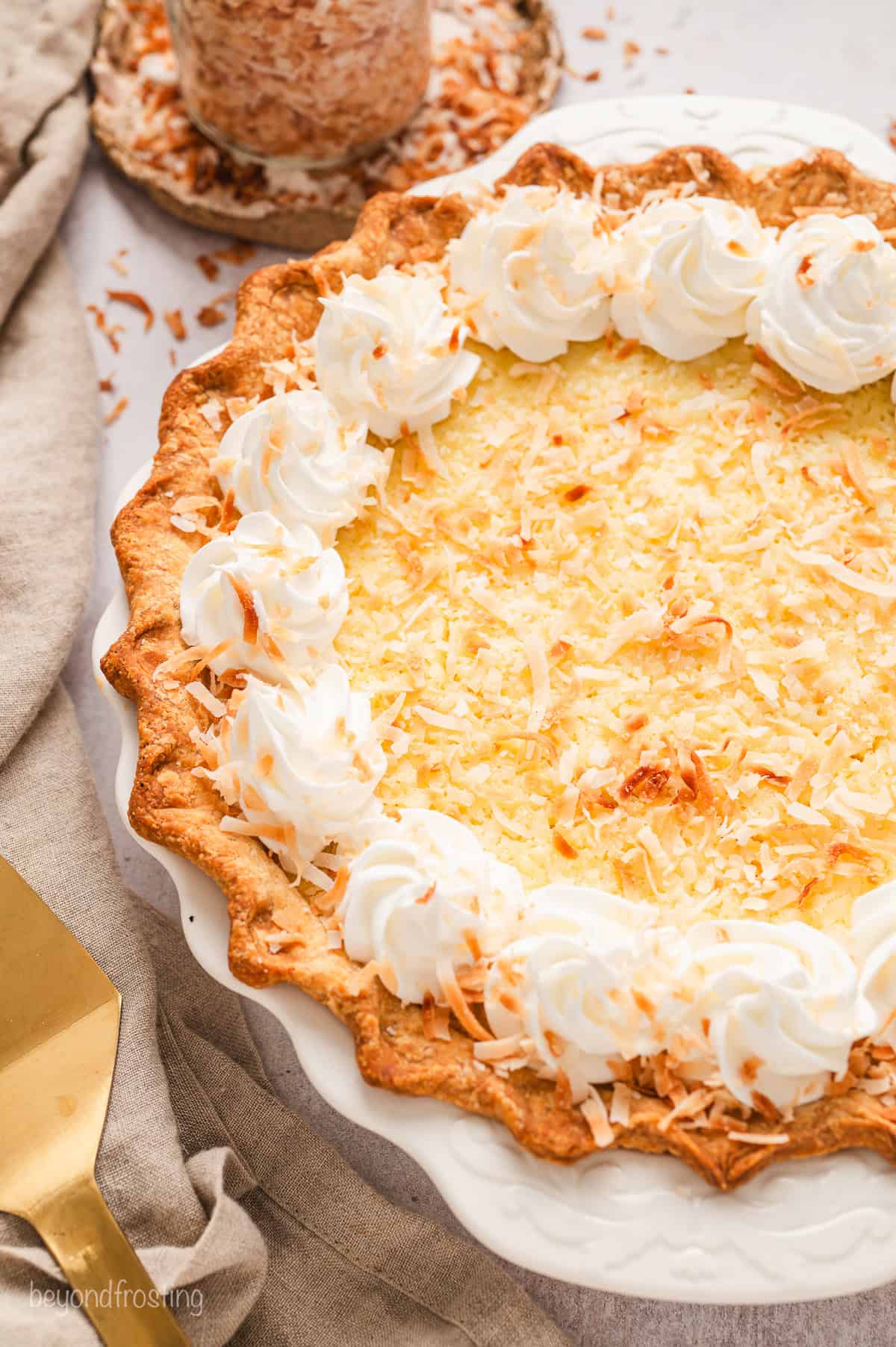
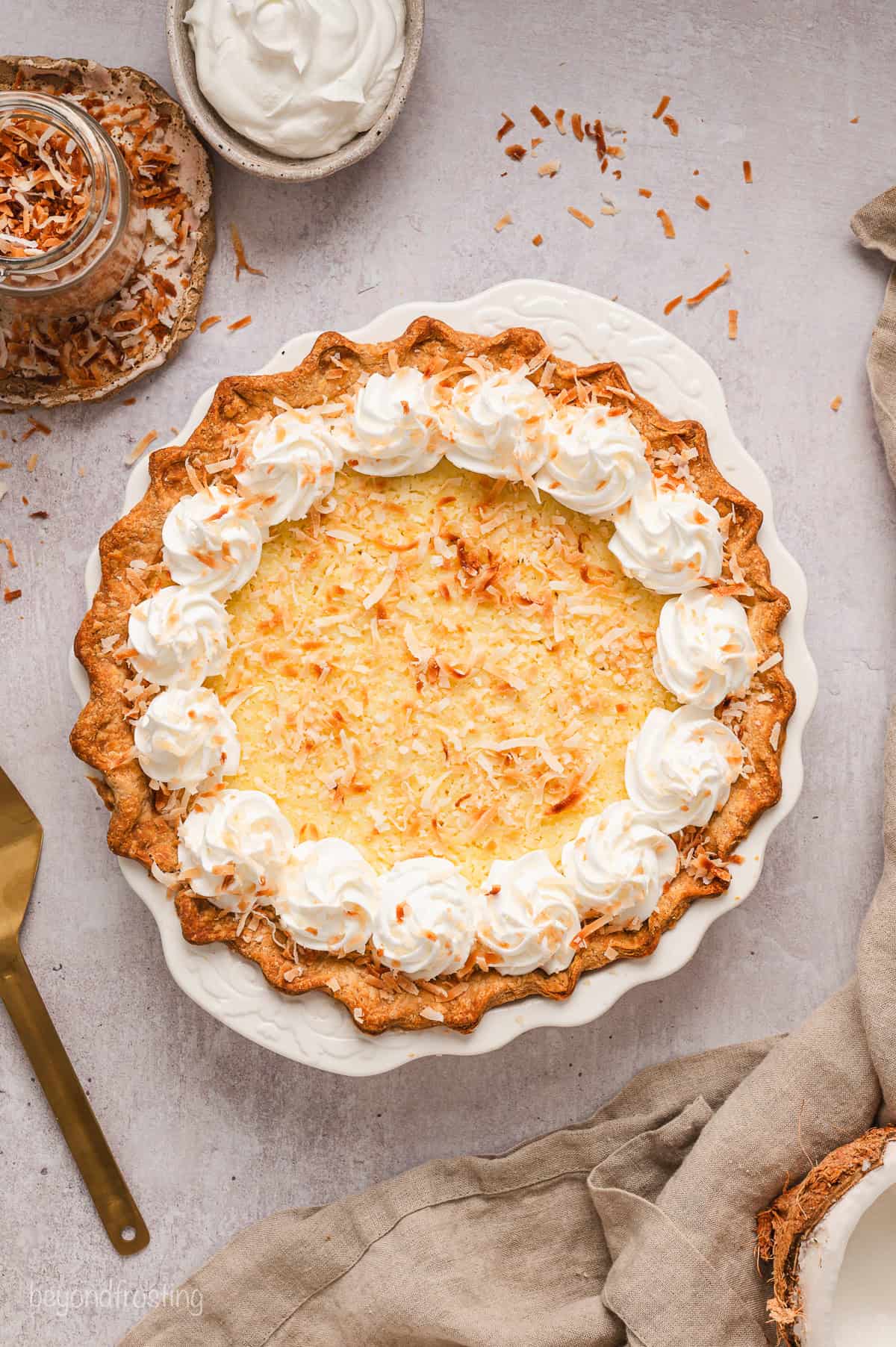
- Chill. This pie needs to cool completely before serving, so I like to let it reach room temperature and then place it in the fridge to chill. I love serving my slices cold, garnished with toasted coconut flakes and whipped cream. I think that this coconut custard pie would also taste amazing topped with raspberry rosé sorbet or drizzled with salted caramel sauce or melted chocolate.
Do I Need to Blind Bake the Pie Crust?
Unlike many custard pie recipes, this one doesn’t call for blind baking the pie crust. A “blind” bake partially bakes the crust so it’s not raw when you pour the custard into it. This is an extra step that can ensure the pie crust doesn’t become soggy, but I’ve never found it necessary in this recipe! If you’re concerned about a soggy pie crust, however, see my full tutorial on how to blind bake a pie crust for step-by-step instructions.
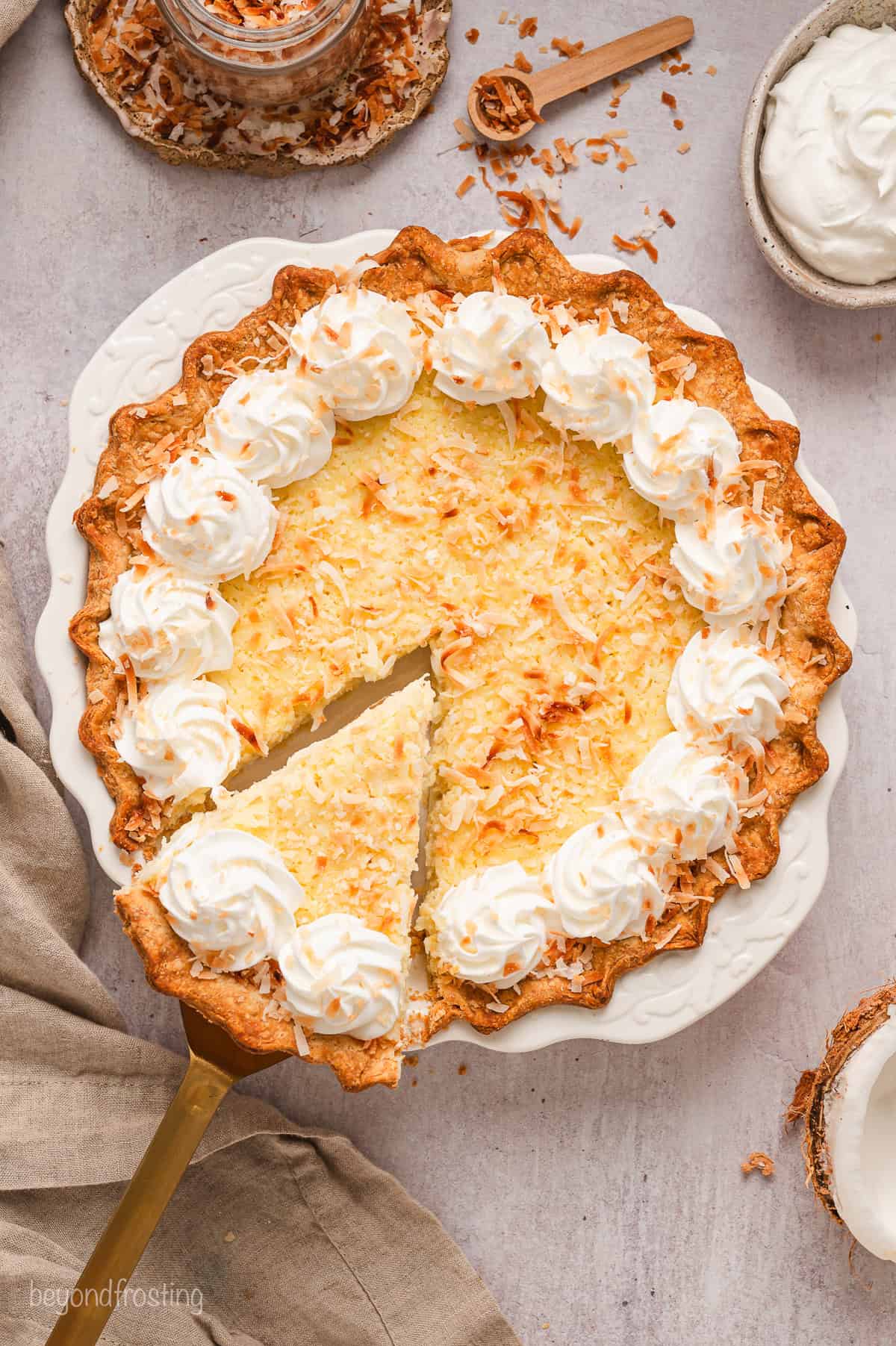
Tips for the Best Coconut Custard Pie
- Bake high, then low. Starting this coconut custard pie in a hot 450ºF oven quickly sets the crust and kickstarts the cooking of the filling. Reducing the oven temperature afterward keeps the filling smooth and allows the pie to finish baking while avoiding a soggy crust or cracked top.
- Don’t overbake. Overbaking your coconut custard pie makes the filling rubbery. It should be set at the edges with a slight jiggle, like a pumpkin pie or cheesecake. The pie should still pass the toothpick test, where it comes out clean.
- Cool the custard pie completely. This pie definitely needs to cool all the way before serving. Let it cool on the counter first, but don’t skip chilling it in the fridge. The cold helps the pie fully set and keeps it fresh.
- Watch for weeping. If you notice any bubbling or liquid on top of the baked pie, gently dab it away with a paper towel.
FAQ
Yes. Keep this custard pie refrigerated in an airtight container until you’re ready to serve.
Unfortunately, freezing is not recommended for custard pies due to the dairy in the filling. It becomes grainy when it’s thawed again.
Similar to a pumpkin pie, the filling will still be a bit jiggly, but a toothpick stuck into the middle of the pie should come out clean. The custard becomes more firm as it cools.
It’s likely your oven was too hot. High temperatures can cause the top of the custard pie to crack. Only bake this pie at 450ºF for the first 20 minutes, then lower the oven temperature to 350ºF for the last 20-25 minutes of baking.
The main difference between coconut custard pie and coconut cream pie is that a custard pie is baked, while a cream pie is not. Coconut cream pie has a pudding-like filling that’s chilled in a par-baked crust. Coconut custard pie has a raw custard filling that sets up as it bakes in the oven.
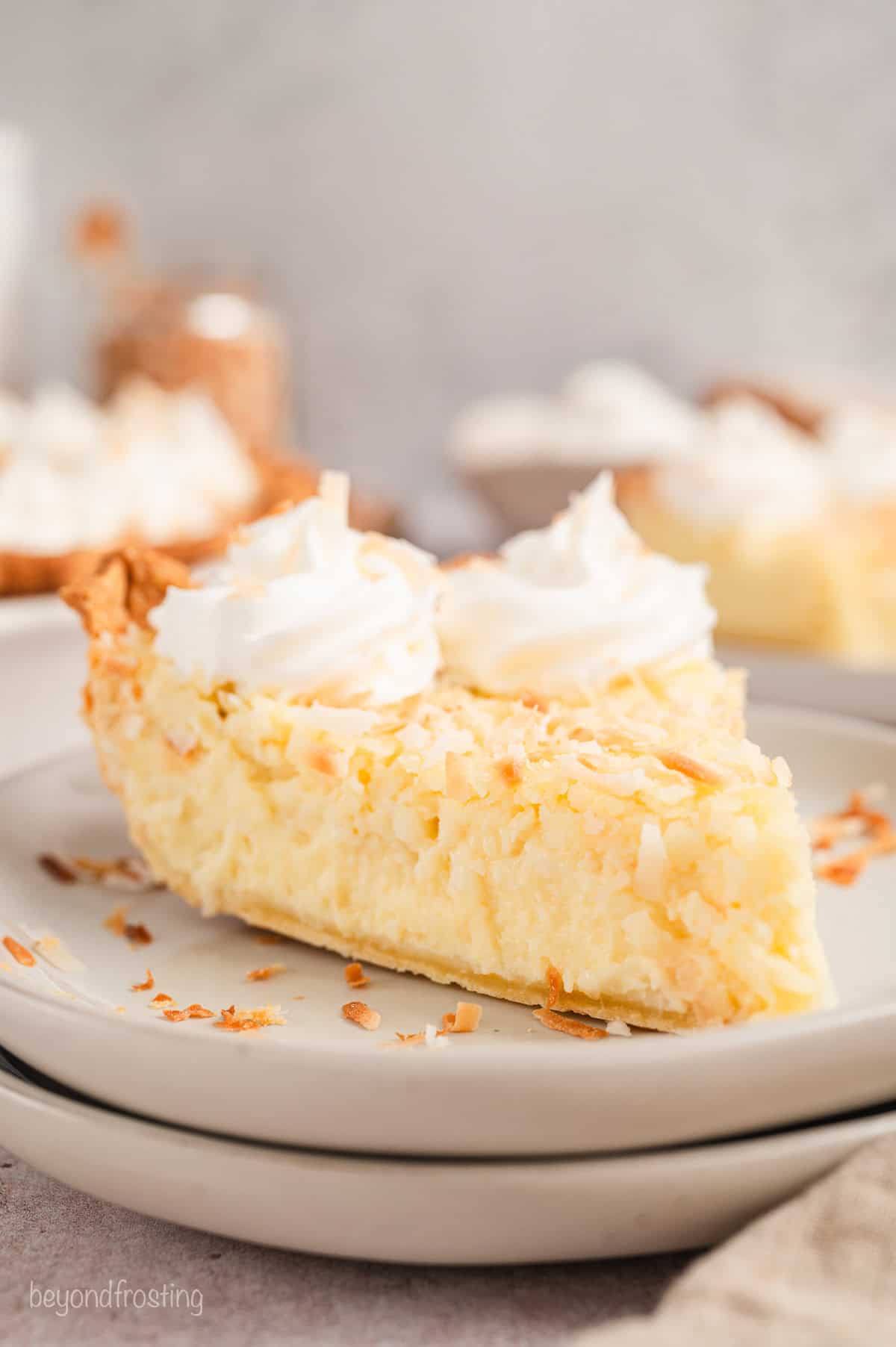
Storage
- Refrigerate. This custard pie lasts up to 4 days in the fridge. Make sure it’s cooled completely before you cover and store it. Whenever possible, I try to leave off any garnishes like whipped cream until it’s time to serve, so it’s fresh.
More Homemade Pies
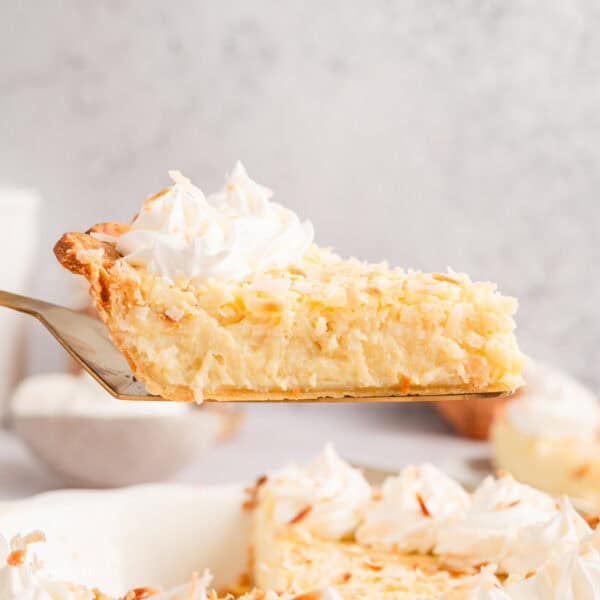
Coconut Custard Pie
- Prep Time: 30 minutes
- Chill Time: 4 hours
- Cook Time: 40 minutes
- Total Time: 5 hours 10 minutes
- Yield: 8 slices
- Category: Pie
- Method: Baked
- Cuisine: American
Description
This creamy coconut custard pie recipe is easy to make with plenty of shredded coconut baked into a melt-in-your-mouth, homemade coconut custard. I use my favorite flaky pie crust and top this pie with toasted coconut and whipped cream.
Ingredients
- 1 Pie crust shell, prepared
- 3 Large eggs, beaten
- ½ cup (95g) granulated sugar
- 1/8 teaspoon salt
- 1 teaspoon (5ml) coconut extract
- 1 cup (236ml) whole milk
- 1 cup (236ml) coconut milk, well mixed
- 2 cups (240g) sweetened shredded coconut
- Whipped cream for garnish
Instructions
- Preheat oven to 450° F.
- Roll out the dough into an 11-12” circle. Gently place it into a standard depth 9” pie plate. Trim the excess edges and crimp. Place in the refrigerator while preparing the filling.
- To prepare the filling start by whisking the eggs, gradually adding in sugar and salt. Whisk until smooth and frothy. Add the coconut extract, milk and coconut milk. Be sure to mix the coconut milk before adding to the eggs. Last, add the shredded coconut and whisk into the filling. Pour the batter into the prepared pie shell.
- Place pie plate on the lower rack in the oven. Bake at 450°F for 20 minutes. After 20 minutes, turn the oven down to 350° F and cover the crust with foil or a pie shield to prevent burning. Bake for another 20-25 minutes.
- The pie will still be slightly jiggly on top, but stick a toothpick around the pie to ensure the filling has baked. If there is any bubbling or liquid on top, dab it lightly with a paper towel.
- Allow the pie to cool completely before serving. I suggest refrigerating and serving cold.
Equipment
 Buy Now →
 Notes
- Storing: Store this coconut custard pie in an airtight container in the fridge for 3-4 days. Freezing custard pies isn’t recommended.
Nutrition
- Serving Size: 1 slice
- Calories: 373
- Sugar: 24.2g
- Sodium: 257.5mg
- Fat: 23.6g
- Carbohydrates: 36.4g
- Fiber: 1.9g
- Protein: 6g
- Cholesterol: 70.4mg

i haven’t tried. can i use this recipe for mini tarts and what about an italian merguine yummy
Hello, I have not tried this as a mini tart recipe yet. Please let me know if you try it 🙂
i haven’t tried. can i use this recipe for mini tarts ty
Hi leeann, I have not tried turning this into mini tarts.
Can you please tell me if it would be possible to make this recipe as small individual desserts, say 4 or 5, instead of the one large pie? Thank you for your assistance.
I don’t see why not. You could do muffin tin size.
Pie came out perfect. I had extra pie filling for the regular-sized pie crust I bought and I put it in a ramekin like a coconut creme brulee. Thank you!
That’s wonderful Bridget! I love the individual serving size too!
First time making a coconut custard pie. Filling was delicious and instructions were on point. Thanks will definitely be making this again and again
Oh that’s wonderful Leah, thank you!
I tried this but didn’t have success with it. I looked at other recipes and noticed the said to only use the yolks. I am new to pie making so not sure if that’s usual. The pie came out like scrambled eggs with coconut. Any thoughts on what I may have done wrong?
Hi Matthew, it sounds like it wasn’t baked long enough if that is the texture you had, was it runny?
This recipe is good if you want to make only custard with it. I did not find it to be the best to make a pie with. The shredded coconut was too much for my taste. I think I could do with 1 cup instead of 2. It felt like I was eating only shredded coconut.
Thank you for your feedback. The original version had less coconut and other would complain it wasn’t enough. Sometimes you can’t win.
Can a graham cracker pie shell be used?
A graham cracker crust would not likely hold up the filling, you could likely make 2 pies with a graham cracker filling in a standard pie dish
Disappointed, too much coconut, made recipe, we were excited to try, yet I definitely would cut back on the coconut. Throwing out the remainder of the pie.
This is a first.
I just came across your wonderful coconut custard pie recipe, here, and wonder–have you ever adapted it to have a meringue topping? I see you mention it might weep, so I am trying to figure out if the pie could even pair with a meringue top(?) Appreciate any feedback! I might just make this for Thanksgiving! 🙂
Hi Catherine, I have not specifically done a meringue topping for this one.
I made this today for the first time. It worked worked perfectly! Such an easy dessert. Thank you for such a lovely recipe. I’m in Australia so had to do a little concerting and adjusting of the oven temp but so happy with the result.
Amazing Pam! I am so happy to hear this! Thank you for sharing your feedback.
Kelly asked about using a graham cracker crust and you were concerned about the amount of liquid in the pie affecting the crust. Maybe she could make a slipped custard pie if she is really eager to use the graham cracker crust.
This pie sounds wonderful and I intend to make it tonight.